
Close

Choosing the right freight container in 2026 is a purchasing decision, not a simple size comparison. Global buyers must match cargo behavior with route conditions, handling equipment, and delivery schedules. A standard 20-foot dry container suits boxed machinery, furniture, and palletized goods. A 40-foot high-cube version adds valuable vertical space for lighter, bulky products. However, usable capacity depends on payload limits, pallet dimensions, and local road rules. Details matter. Reefer containers protect temperature-sensitive products, but they demand power, monitoring, and disciplined pre-trip inspections. Set-point records, airflow space, and door-opening frequency can affect cargo quality. These are practical buying checks.
Open-top and flat-rack containers support oversized machinery, timber, and carefully secured project cargo. Tank containers serve approved liquid transport when product compatibility and cleaning records are verified. Each type carries different costs for loading, inland movement, storage, and repositioning. Buyers should request current specifications, inspection evidence, tare weight, maximum payload, and certification details. An experienced supplier should explain limitations instead of promising universal suitability. That conversation matters. Container availability also changes by port, season, trade lane, and equipment imbalance. A container that looks economical may create delays after discharge. Not every assumption survives real handling. This guide compares the leading freight container types for global buyers in 2026. It focuses on practical selection, safer planning, and transparent total cost. Some recommendations will still require local verification. That is not a weakness; it is responsible sourcing.
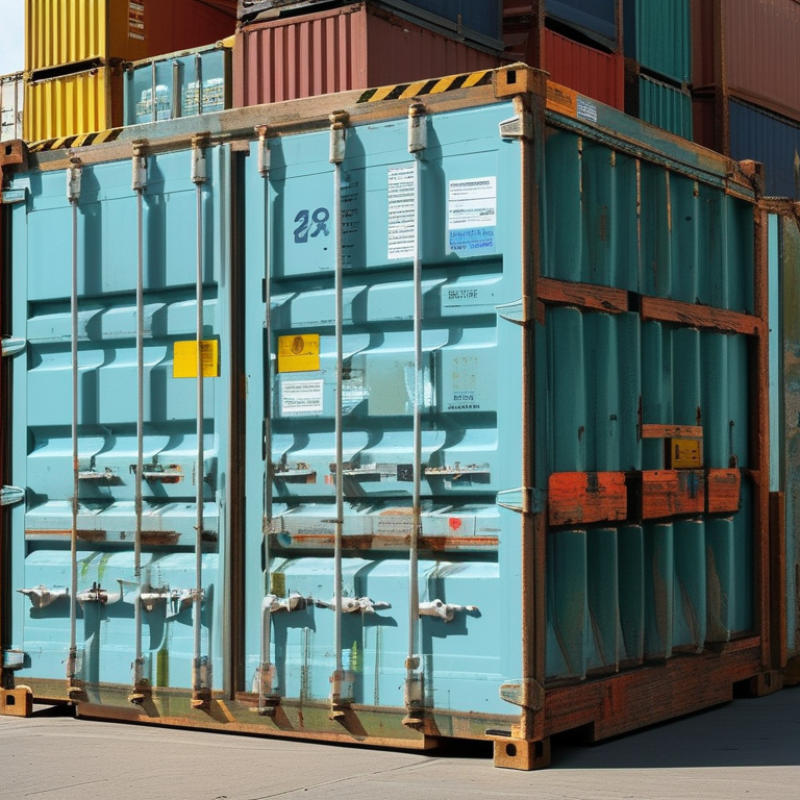
Freight containers are standardized steel units that move cargo between ships, railways, and trucks. Their common dimensions reduce handling time and damage. A 20-foot container suits dense cargo, while a 40-foot unit carries more volume. High-cube models add internal height for furniture, machinery, and packaged goods. Reefer containers maintain controlled temperatures for food and pharmaceuticals. Open-top and flat-rack containers handle tall, wide, or heavy equipment. Tank containers transport approved liquids under strict technical controls.
UNCTAD’s Review of Maritime Transport 2024 recorded 12.3 billion tonnes of seaborne trade in 2023. It also reported container-ship capacity near 28.5 million TEU in early 2024. These figures show why standard equipment matters. Yet, container selection is not only about capacity. The World Bank’s Logistics Performance Index 2023 highlights tracking, timeliness, and reliability as practical trade outcomes. A cheaper container can create delays if cargo needs temperature control. Small details matter. I have seen loading plans fail because pallet height was measured incorrectly.
Tips: Confirm cargo dimensions, gross weight, ventilation needs, and loading equipment before booking. Check the container’s inspection condition and door clearance. Leave room for airflow in reefer units. For unusual cargo, request a packing plan and verified weight. Do not assume a 40-foot container is always better. Empty space can increase shifting risk and handling costs. Recheck port restrictions and equipment availability before shipment.
| Container Type | Common ISO Size Options | Typical Internal Volume | Typical Payload Capacity | Temperature or Loading Features | Best-Suited Cargo | Key Global Trade Considerations |
|---|---|---|---|---|---|---|
| General-Purpose Dry Container | 20 ft, 40 ft, 40 ft High Cube | Approximately 33 m³ (20 ft), 67 m³ (40 ft), and 76 m³ (40 ft High Cube) | Usually up to 26–28 metric tonnes, subject to the container’s maximum gross weight and local regulations | Fully enclosed, weather-resistant steel or aluminum body; standard cargo doors at one end | Cartons, machinery, furniture, packaged consumer goods, textiles, and non-temperature-sensitive cargo | The most widely available option. High Cube versions provide approximately 30 cm more internal height and are useful for lightweight, bulky cargo. |
| Refrigerated Container | 20 ft, 40 ft High Cube | Approximately 28 m³ (20 ft) and 67 m³ (40 ft High Cube) | Generally about 25–29 metric tonnes, depending on the refrigeration unit, tare weight, and route limits | Powered refrigeration system; commonly supports a controlled range of approximately −25°C to +25°C, depending on equipment and cargo requirements | Fresh and frozen food, pharmaceuticals, flowers, dairy products, meat, seafood, and temperature-sensitive chemicals | Requires a continuous power supply at terminals, on vessels, and sometimes during inland transport. Pre-cooling, airflow, set-point control, and data logging are essential. |
| Open-Top Container | 20 ft and 40 ft | Approximately 32 m³ (20 ft) and 65 m³ (40 ft), depending on the removable roof arrangement | Usually up to 26–28 metric tonnes, subject to gross-weight and lifting limitations | Removable fabric roof or detachable hard roof; cargo can be loaded through the top and secured internally | Scrap metal, timber, stone, glass, industrial machinery, and tall cargo that cannot be loaded through standard doors | Top-loading may require cranes or specialized equipment. Cargo height, lashing, center of gravity, and whether the roof can be fitted for sea transport must be confirmed before booking. |
| Flat Rack Container | 20 ft and 40 ft; fixed-end or collapsible-end designs | No enclosed cubic-volume rating; usable deck length is typically about 5.6 m or 11.7 m | Often approximately 25–40 metric tonnes, depending on the unit, concentrated-load limits, and transport route | Open sides and open top; fixed or folding end walls; designed for heavy, wide, or tall cargo | Construction equipment, vehicles, steel products, transformers, boats, generators, and project cargo | Out-of-gauge dimensions may create extra charges, special stowage requirements, route restrictions, and permit needs. Professional lashing and a cargo securing plan are required. |
| ISO Tank Container | Commonly 20 ft frame; tank capacity varies by product and design | Usually approximately 21,000–26,000 litres | Often about 25–26 metric tonnes, limited by tank specifications, liquid density, and regulations | Stainless-steel tank within an ISO frame; may be insulated, heated, or pressure-rated for specific cargoes | Bulk liquids, food-grade liquids, liquefied gases, and hazardous or non-hazardous chemicals | Tank approval, cleaning certificates, pressure ratings, dangerous-goods documentation, filling ratio, and compatibility with the cargo must be checked before shipment. |
| Ventilated Container | Primarily 20 ft | Approximately 31–32 m³ | Usually up to about 26–28 metric tonnes, subject to the container’s gross-weight rating | Passive ventilation openings reduce condensation and improve air exchange; it does not provide active temperature control | Coffee, cocoa, agricultural products, fresh produce, timber, and other cargo requiring natural ventilation | Ventilation cannot replace refrigeration or humidity control. Packaging, moisture content, air circulation, and climate conditions along the route should be assessed. |
| Insulated Container | Commonly 20 ft and 40 ft, depending on the equipment pool | Typically lower than an equivalent dry container because of insulated wall construction | Often approximately 25–28 metric tonnes, depending on tare weight and the applicable gross-weight limit | Thermally insulated walls help reduce temperature fluctuations but do not actively cool or heat cargo | Temperature-sensitive products with moderate protection needs, food ingredients, chemicals, and cargo exposed to short-term temperature variation | Useful where passive thermal protection is sufficient. It should not be treated as a substitute for a refrigerated container when a fixed temperature range is required. |
| Pallet-Wide Container | Commonly 45 ft High Cube in selected trade lanes | Approximately 85–89 m³, depending on the internal design | Often approximately 27–29 metric tonnes, subject to gross-weight and axle limits | Wider internal profile than a standard container; designed to improve pallet utilization | Euro-palletized goods, retail products, packaged food, appliances, and high-volume general cargo | Availability is more limited than standard 20 ft and 40 ft equipment. Confirm vessel acceptance, terminal handling, inland route clearance, and destination equipment compatibility. |
Notes: Dimensions, volumes, tare weights, payloads, and temperature ranges are typical industry values rather than universal specifications. Actual limits vary by container design, certification, cargo density, vessel and terminal rules, road or rail regulations, and the shipment route. Always verify the container’s data plate and the applicable dangerous-goods, customs, and cargo-securing requirements before loading.



© Copyright 2025 | CONTAINERED – SHIPPING CONTAINER HOMES IN MELBOURNE