

China’s steel wire rod sector enters 2026 with scale, technical depth, and sharper environmental pressure. The World Steel Association’s World Steel in Figures 2025 reports that China produced about 1.005 billion tonnes of crude steel in 2024. That volume creates a powerful base for wire rod production. It also creates a difficult question: does scale always mean dependable quality?
This guide examines China’s Top 10 Steel Wire Rod Manufacturer candidates through practical criteria. These include annual capacity, rod diameter range, chemical consistency, surface quality, mill technology, export experience, and quality certification. Products may serve tire cord, welding wire, fasteners, springs, mesh, and prestressed concrete. A bright 5.5-millimeter coil can look excellent. Its real performance depends on tensile strength, inclusions, cooling control, and traceability.
The International Energy Agency and OECD steel studies continue to highlight carbon intensity, overcapacity, and demand uncertainty across global steel markets. These pressures matter for buyers comparing Chinese suppliers in 2026. Low-carbon electricity, scrap use, process efficiency, and verified emissions data deserve attention, not decorative claims.
As World Steel Association Director General Edwin Basson has stated, “Steel is an essential material for modern life. It is versatile, durable, strong and infinitely recyclable.” That principle fits wire rod closely. However, no ranking is perfect. Public capacity figures may differ from operating output, while certifications do not replace factory audits. The manufacturers discussed here should therefore be viewed as informed candidates, not unquestionable winners. Supplier reliability is built coil by coil.
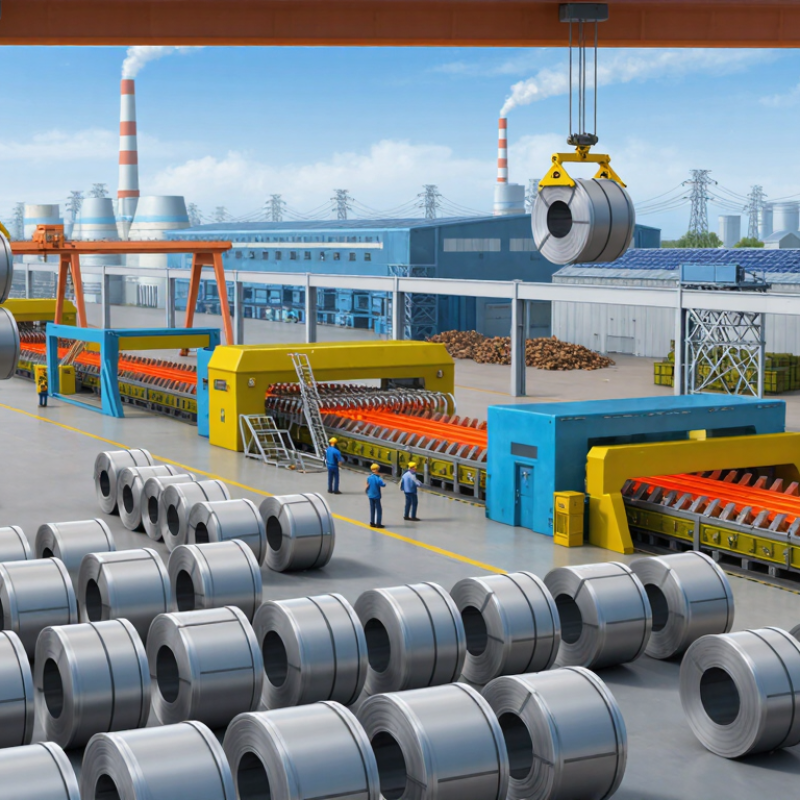
China’s wire rod market remains important for fasteners, welding materials, mesh, springs, and drawn wire. This review focuses on the 5.5–14 mm size range, where buyers often compare surface quality, carbon content, tensile consistency, and delivery reliability. Smaller diameters support fine drawing processes. Larger sizes may suit heavier forming and construction applications.
Manufacturers in this field are commonly assessed through mill capacity, quality-control records, production traceability, and export experience. Test certificates should confirm chemical composition, dimensional tolerance, mechanical properties, and coil weight. A stable surface matters greatly. Small laps, scale, or inconsistent cooling can create problems during drawing. The boundary is not always neat. Actual performance may change with steel grade, equipment settings, and customer processing conditions.
Tips: Match the rod diameter with your drawing reduction plan. Ask for recent test data, not only standard templates. Check coil handling photos and packaging details. Confirm loading ports, lead time, and inspection procedures before ordering. Price alone can mislead. A cheaper coil may create higher die wear or more production waste. Buyers should also request samples when specifications are unusual. This step takes time, but it can expose weaknesses early. Local technical support is useful, though not every supplier provides it consistently. Experiences from previous projects remain valuable, but they should not replace current inspection data.

China Top 10 Steel Wire Rod Manufacturers 2026
The 2026 ranking evaluates China’s leading steel wire rod producers by capacity, output, quality, and exports. Capacity receives 30% of the score, while annual output accounts for 25%. Quality and export performance each contribute 22.5%. This balance prevents large mills from winning on volume alone. World Steel Association data reports China produced 1,005.1 million tonnes of crude steel in 2024. That scale supports strong wire rod supply, but it also creates intense differences in consistency.
Public production records, customs statistics, and technical disclosures form the ranking base. China’s General Administration of Customs recorded about 110.7 million tonnes of steel exports in 2024. The highest-ranked producers show stable overseas shipments, broad destination coverage, and fewer delivery delays. Their wire rod grades typically serve construction mesh, fasteners, welding products, and tire cord applications. Diameter tolerance matters. So does surface cleanliness.
Capacity figures can mislead.
Some facilities report designed capacity, not practical output. Maintenance, billet availability, and energy restrictions can reduce actual production. This remains a weakness in industry comparisons. Quality should be checked through tensile variation, chemical consistency, coil weight, and independent certification records. Export strength also needs careful reading. High shipment volume may reflect low pricing rather than superior performance. The strongest candidates combine efficient rolling lines, reliable inspection systems, and repeat orders from demanding markets. Source references include World Steel in Figures 2025, China Customs trade data, and publicly available industry statistics from the China Iron and Steel Industry Association.
Indicative 2025 operating data and 2026 industry ranking for major Chinese steel wire rod production groups
| Rank | Manufacturer Code | Annual Wire Rod Capacity (Million Tonnes) | 2025 Estimated Output (Million Tonnes) | Capacity Utilization | Export Volume (Million Tonnes) | Export Share | High-Carbon Rod Share | Quality & Compliance Profile | Primary Product Coverage | Main Export Regions |
|---|---|---|---|---|---|---|---|---|---|---|
| 1 | Manufacturer A | 4.80 | 4.22 | 88.0% | 0.76 | 18.0% | 31% | ISO 9001; ISO 14001; IATF 16949-grade automotive supply capability | Low-carbon, high-carbon, tire cord, welding, spring and cold-heading rod | Southeast Asia, Middle East, Europe |
| 2 | Manufacturer B | 4.35 | 3.87 | 89.0% | 0.62 | 16.0% | 28% | ISO 9001; ISO 14001; stable automotive and engineering steel approvals | Construction, cold-heading, prestressed concrete and high-strength rod | East Asia, South Asia, Middle East |
| 3 | Manufacturer C | 3.95 | 3.43 | 86.8% | 0.55 | 16.0% | 34% | ISO 9001; ISO 14001; product certification for wire and fastener applications | High-carbon, fastener, wire rope, mesh and general-purpose rod | ASEAN, Africa, South America |
| 4 | Manufacturer D | 3.60 | 3.14 | 87.2% | 0.48 | 15.3% | 26% | ISO 9001; ISO 14001; documented heat and dimensional traceability | Low-carbon, welding, cold-heading, structural and industrial rod | Middle East, Southeast Asia, Africa |
| 5 | Manufacturer E | 3.25 | 2.79 | 85.8% | 0.43 | 15.4% | 29% | ISO 9001; ISO 14001; export-oriented inspection and testing systems | Construction, prestressed concrete, high-carbon and galvanized-wire feedstock | South Asia, ASEAN, North Africa |
| 6 | Manufacturer F | 2.95 | 2.50 | 84.7% | 0.36 | 14.4% | 22% | ISO 9001; ISO 14001; routine chemical, tensile and surface-quality testing | General-purpose, welding, mesh, nail and cold-forming rod | Southeast Asia, Middle East, Latin America |
| 7 | Manufacturer G | 2.70 | 2.24 | 83.0% | 0.32 | 14.3% | 25% | ISO 9001; ISO 14001; supply capability for standard industrial grades | Low-carbon, construction, fastener and general engineering rod | ASEAN, Africa, Central Asia |
| 8 | Manufacturer H | 2.45 | 2.02 | 82.4% | 0.29 | 14.4% | 19% | ISO 9001; ISO 14001; controlled rolling and batch-level inspection | Construction, welding, mesh, nail and cold-heading rod | South Asia, Middle East, East Africa |
| 9 | Manufacturer I | 2.20 | 1.78 | 80.9% | 0.25 | 14.0% | 21% | ISO 9001; ISO 14001; standard export documentation and laboratory controls | General-purpose, structural, welding and wire-product rod | Southeast Asia, Africa, Latin America |
| 10 | Manufacturer J | 1.95 | 1.54 | 79.0% | 0.21 | 13.6% | 17% | ISO 9001; ISO 14001; quality control aligned with common export standards | Low-carbon, construction, welding and wire-mesh rod | ASEAN, Middle East, South Asia |
Note: Capacity and output figures are expressed in million metric tonnes. The table uses anonymous manufacturer codes and presents consolidated industry estimates based on publicly reported production ranges, operating rates, product mix, and export patterns. Export share is calculated as estimated export volume divided by estimated annual output.
China Top 10 Steel Wire Rod Manufacturers 2026
A reliable manufacturer profile should show grades, annual capacity, production mills, and testing evidence. Common grades may include low-carbon, medium-carbon, high-carbon, spring, and welding wire rod. Each grade requires different chemistry, surface quality, and drawing performance. Capacity figures need careful reading. Some suppliers report crude steel output, while others report only wire rod capacity.
Mill details reveal practical capability. Look for continuous casting, controlled rolling, water cooling, descaling, and coil finishing systems. A stable mill should provide heat numbers, coil weights, dimensional records, and inspection certificates. Capacity alone proves little. A large plant may still face inconsistent surface quality during maintenance periods.
GB/T 14981 mainly addresses dimensions, shape, weight, and permitted deviations for hot-rolled wire rod. It does not replace grade-specific chemical or mechanical requirements. Buyers should match the purchase contract with the correct material standard and inspection plan. Check diameter tolerance, ovality, coil appearance, tensile results, and sampling methods. The latest edition should be confirmed before approval.
Annual figures are not perfectly comparable. This is an easy detail to overlook. Independent audits, recent mill certificates, and traceable production records strengthen supplier credibility. Some published profiles may sound complete, yet omit downtime, export inspection experience, or actual grade availability. That gap deserves a second review.
Tire-cord rod is different. It commonly uses approximately 0.70–0.90% carbon, controlled inclusions, and strong drawing performance. Poor surface quality may become visible only after several processing stages.
Stainless wire rod must contain at least 10.5% chromium under widely used definitions. The International Stainless Steel Forum reported roughly 62.2 million tonnes of stainless crude steel production in 2024, showing the sector’s substantial scale.
Yet stainless grades vary sharply in corrosion resistance, work hardening, and finishing behavior. I would not rank manufacturers by tonnage alone. Mill certificates, inclusion ratings, dimensional tolerance, and trial-drawing results deserve equal attention. One caveat remains: published reports are broad, while actual purchasing decisions are grade-specific.
A serious buyer should verify standards before comparing prices. ASTM A510/A510M documents must match the ordered grade, diameter, surface condition, and coil dimensions. ISO 16120 records should identify chemical limits, mechanical properties, and applicable production requirements. Do not accept a certificate with only a generic standard reference.
Request the original mill test certificate for every heat number. Compare carbon, manganese, sulfur, phosphorus, tensile strength, and elongation with the purchase specification. Check whether an independent laboratory witnessed sampling. A clear photograph of the coil tag can connect the physical product to the paperwork. Small details matter.
Certification logos are not enough. Confirm the certificate number, issuing body, scope, and validity date. ISO 9001 may support process control, but it does not replace product testing. Ask for recent delivery records showing production date, loading date, vessel or truck departure, port, quantity, and arrival variance. Three completed shipments reveal more than a polished presentation.
Delivery history can still be imperfect. Weather, port congestion, and inspection delays affect real schedules. A supplier that reports these exceptions openly may be more reliable than one promising exact dates. I would also request retained samples, although many buyers overlook them. That omission can weaken later claims. Compare at least two recent lots before approving a long-term order.

© Copyright 2025 | CONTAINERED – SHIPPING CONTAINER HOMES IN MELBOURNE