

Choosing China’s top Freeze Dried Dog Food suppliers requires more than comparing prices or attractive packaging. A reliable supplier should demonstrate consistent ingredient sourcing, controlled processing, and clear batch records. Buyers should examine factory experience, production capacity, quality systems, and export documentation before making decisions.
A practical review begins with product samples. Check texture, aroma, color, and package sealing. Freeze-dried pieces should feel light and dry, without excessive powder or unusual odors. Ask for ingredient specifications, nutritional analysis, microbiological testing, and shelf-life evidence. When possible, verify laboratory reports independently. A polished certificate alone is not enough.
Supplier audits can reveal important details. Look at raw material storage, temperature control, sanitation routines, and traceability procedures. Speak with the quality manager, not only the sales representative. Reliable companies usually explain weaknesses honestly and provide corrective plans. No supplier is perfect. Even experienced buyers can overlook changes in meat sourcing or packaging materials.
This guide compares leading Chinese suppliers through a practical, evidence-based lens. It considers manufacturing experience, customization, private-label support, communication, minimum order quantities, and delivery reliability. Regulatory requirements also vary by destination, so importers must confirm current rules with local authorities. Responsible sourcing protects pets, businesses, and long-term customer trust. The strongest supplier may not be the cheapest one. It is the partner that can repeat safe quality, document each step, and respond clearly when problems appear.
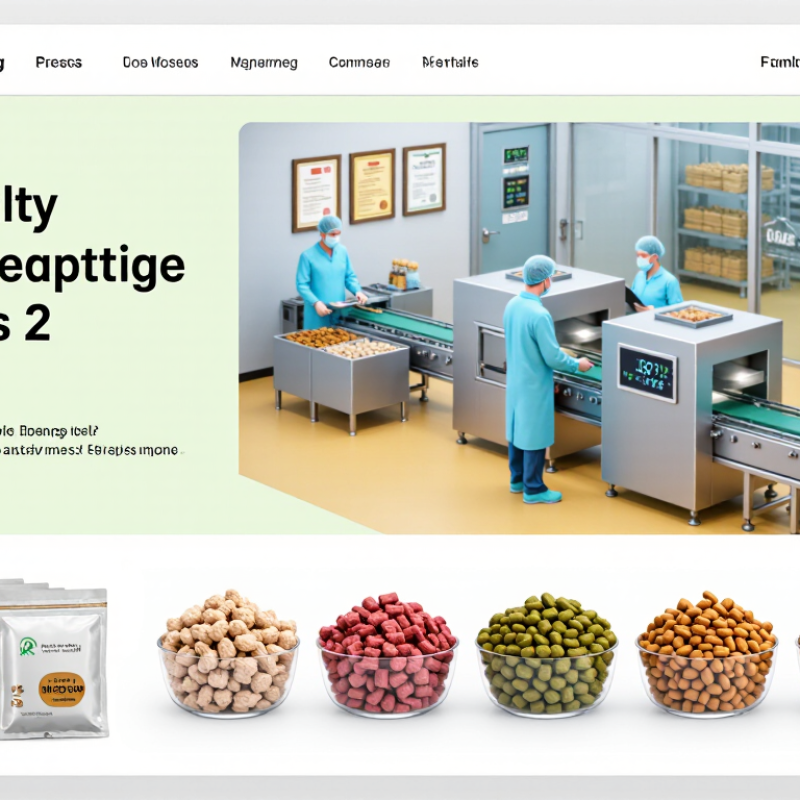
China Top Freeze Dried Dog Food Suppliers?
China’s freeze-dried dog food industry is expanding with rising demand for convenient, high-protein pet diets. Domestic buyers increasingly examine ingredient lists, protein sources, and processing standards. Export demand also comes from distributors in Southeast Asia, Europe, and North America. However, public customs data often groups pet food into broad categories. Exact freeze-dried figures can therefore be difficult to verify.
From my experience reviewing supplier capabilities, serious manufacturers usually show batch records, ingredient traceability, laboratory reports, and stable production capacity. Freeze-drying can preserve aroma and texture, but it does not correct poor raw materials. Export performance depends on destination rules, packaging quality, shelf-life testing, and reliable documentation. Some suppliers report strong growth, yet these claims need independent checking. Market enthusiasm is real, but not every number deserves trust.
Tips: Ask for recent test reports, production photos, export references, and a small sample order. Check moisture levels, product weight, seal quality, and feeding instructions. Compare quotations carefully; a very low price may reflect weaker ingredients or limited testing. Also confirm whether the supplier understands your target market’s import requirements. Small details matter. I would still verify every certificate directly, because paperwork can look complete while operational quality remains uncertain.
| Data Dimension | Reported Value | Scope and Period | Relevance to Freeze-Dried Dog Food Suppliers | Public Source |
|---|---|---|---|---|
| Urban pet consumption market | RMB 279.3 billion | China’s urban dog and cat consumption market in 2023. | Indicates the size of the addressable companion-animal market supporting premium nutrition, functional food, treats, and freeze-dried products. | Pet Industry White Paper |
| Urban dog population | Approximately 51.75 million | Dogs kept in urban households in China, 2023. | Provides a demand base for complete dog food, toppers, training treats, and high-meat snack formats. | Pet Industry White Paper |
| Urban cat population | Approximately 69.80 million | Cats kept in urban households in China, 2023; included as a broader pet-food demand indicator. | Although this table focuses on dog food, the larger cat population supports shared manufacturing capacity, ingredient procurement, and private-label production. | Pet Industry White Paper |
| Pet-food market category | Reported as the largest pet-consumption category | China’s urban pet-consumption market, 2023; includes staple food, treats, and related nutrition products. | Supports continued investment in product development, palatability testing, nutritional formulation, and premium food manufacturing. | Pet Industry White Paper |
| Freeze-dried product positioning | Premium and high-meat segment | Industry positioning rather than a separately published official market total. | Freeze-dried products generally compete through meat inclusion, low-temperature processing, ingredient transparency, convenience, and premium pricing. | FAO Processing Guidance |
| Relevant customs classification | HS 2309.10 | Dog or cat food put up for retail sale; used as a trade-data proxy for many commercial pet-food products. | Useful for screening China’s export activity, but the code does not isolate freeze-dried dog food from kibble, wet food, treats, or other retail pet food. | UN Statistics Division |
| Standalone freeze-dried export code | Not separately disclosed | Public customs systems generally group freeze-dried pet food within broader pet-food or prepared-animal-feed classifications. | Supplier comparisons should combine customs data with factory audits, product specifications, certificates, samples, and destination-market compliance records. | General Administration of Customs of China |
| Export-market compliance | Market-specific requirements | Requirements vary by destination and may include facility registration, labeling, ingredient restrictions, veterinary documents, and microbiological controls. | A capable supplier should demonstrate traceability, batch records, testing procedures, export documentation, and compliance with the destination country’s pet-food rules. | WOAH Standards |
| Key quality-control checkpoints | Moisture, water activity, pathogens, oxidation, and shelf life | Typical controls for low-moisture, meat-based pet-food products. | These controls help buyers evaluate product safety, storage stability, palatability consistency, and the reliability of private-label or contract manufacturing. | U.S. FDA Pet Food Guidance |
| Recommended supplier-evaluation factors | 10 core factors | Factory qualification, ingredient traceability, freeze-drying capacity, formulation support, testing, packaging, MOQ, lead time, export experience, and after-sales control. | Provides a neutral framework for identifying suitable Chinese suppliers without ranking companies or relying on brand claims. | ISO Food Safety Guidance |

China’s freeze-dried dog food suppliers generally operate as OEM, ODM, or private-label manufacturers. The distinction matters when developing a safe, repeatable product. OEM production follows your formula, ingredient list, and processing instructions. It offers stronger control, but requires technical specifications and stable raw-material sourcing. It may suit established distributors with proven recipes.
ODM manufacturers provide more support. Their teams may develop formulas, adjust protein levels, and recommend packaging formats. This reduces development time, although the same base formula may serve several customers. According to Grand View Research’s 2023 pet food report, the global pet food market was valued at about US$136.8 billion in 2022. That scale increases competition and makes product differentiation important. A clear formula story helps.
Private-label manufacturers usually offer ready-made recipes with customized labels and cartons. This model lowers the initial workload and can support smaller trial orders. However, buyers should verify ownership of the formula, batch records, and testing documents. APPA reported US pet industry spending of US$147 billion in 2023, showing continued demand for premium pet products. Yet a premium package cannot repair weak quality control. Ask for microbial results, moisture data, certificates of analysis, and traceability records. Check HACCP or ISO 22000 systems through an independent audit. A certificate alone is not proof. The line between ODM and private label is sometimes unclear. That ambiguity deserves written clarification before payment.
China’s top freeze-dried dog food suppliers should be judged by nutrition evidence, not packaging claims. AAFCO’s Dog and Cat Food Nutrient Profiles set an 18% crude-protein minimum for adult dog maintenance, measured on a dry-matter basis. This is a floor, not an ideal feeding target.
Freeze-dried food can confuse comparisons. A label showing 30% protein and 5% moisture equals about 31.6% protein on a dry-matter basis. The calculation is simple: protein divided by dry matter. Ask suppliers for moisture, protein, fat, fiber, and ash results from independent laboratories. Request batch-specific certificates of analysis. One old report is not enough.
AAFCO also expects a complete and balanced nutritional claim to follow its profile or feeding-trial requirements. The National Research Council’s Nutrient Requirements of Dogs and Cats also stresses balanced amino acids, minerals, and energy, not protein alone. Calcium and phosphorus deserve close attention, especially for growing dogs. I would also check rehydration instructions, since serving size changes nutrient intake. Protein looks impressive on a front label. Sometimes, it hides weak formulation details. Supplier audits should review traceability, sanitation, storage temperature, and recall procedures. I may overvalue protein myself; a higher number cannot repair poor digestibility or an unbalanced recipe.
China Top Freeze Dried Dog Food Suppliers?
Reliable freeze-dried dog food suppliers should show more than attractive packaging. Quality begins with controlled raw materials, documented processing, and traceable storage. Ask for production records, sanitation logs, allergen controls, and batch identification. Suppliers should explain how their products align with GB 31607-2023 and applicable Chinese food-safety requirements. Vague answers deserve caution.
HACCP plans should identify risks from receiving through freeze-drying, packing, and transport. ISO 22000 certification adds a structured food-safety management system, but certification alone cannot guarantee every batch. Check the certificate scope, issuing body, and expiration date. A useful COA should list the exact lot number, test date, laboratory, methods, and results. Review moisture, microbiological limits, contaminants, and nutritional values against the product specification.
Paperwork can look perfect.
A careful buyer should contact the testing laboratory independently when possible. Compare the COA with retained samples and production records. Inspect whether seals, labels, and storage temperatures match the documented process. Some suppliers provide impressive certificates but weak traceability. That gap matters. Requirements may also differ by destination market, so local compliance review remains necessary. No audit is flawless; even experienced teams can miss seasonal raw-material changes. Recheck controls regularly, especially after formula, supplier, or packaging changes.
China Top Freeze Dried Dog Food Suppliers?
Supplier Ranking: Capacity, MOQ, Certifications, Pricing, and Export Records
A practical supplier ranking should start with evidence, not polished factory photos. APPA’s 2024 report recorded US pet industry sales of $150.6 billion in 2023, increasing pressure on reliable private-label production. I would score capacity at 25%, food safety at 25%, export records at 20%, pricing at 15%, and MOQ at 15%. Capacity should include freeze-drying chambers, monthly output, backup power, and batch traceability. Ask for production records, not only stated capacity.
MOQ commonly ranges from 100 to 500 kilograms for stock formulas. Custom recipes may require 1–5 metric tons. Pricing should be compared per finished kilogram, including meat yield, packaging, testing, and shipping terms. A low quote can hide expensive moisture loss. Request a 500-gram pilot batch and inspect the texture, odor, seal, and rehydration time.
Certifications need careful checking. HACCP, ISO 22000, BRCGS, and facility registration support a stronger compliance profile, but certificates must match the factory address and validity dates. FDA import requirements may involve supplier verification, while export documentation should align with the destination country. ITC Trade Map and customs records can help verify HS 2309 shipment activity, although this code does not isolate freeze-dried products. That limitation matters. Export screenshots are weak evidence. Request redacted bills of lading, inspection reports, laboratory results, and recent destination markets. Experienced buyers still make mistakes when ranking price above consistency.
Anonymized supplier benchmark by annual production capacity, minimum order quantity, certification coverage, export reach, and indicative FOB pricing.
| Profile | Annual Capacity (t) | MOQ (kg) | Certifications | Export Markets | FOB Price (USD/kg) |
|---|---|---|---|---|---|
| Supplier Profile A | 1,200 | 500 | 4 | 32 | 8.50 |
| Supplier Profile B | 900 | 300 | 3 | 24 | 9.20 |
| Supplier Profile C | 650 | 200 | 3 | 18 | 10.40 |
| Supplier Profile D | 450 | 100 | 2 | 12 | 12.10 |
| Supplier Profile E | 300 | 100 | 2 | 9 | 13.50 |
The chart uses a normalized index from 0 to 100 so that operational scale, order flexibility, certification coverage, export experience, and pricing can be compared on one visual scale. Capacity, certification, and export figures should be verified directly with each supplier before purchasing.

© Copyright 2025 | CONTAINERED – SHIPPING CONTAINER HOMES IN MELBOURNE