Top 10 Innovative Shipping Container Buildings You Need to See?
In recent years, the trend of shipping container buildings has surged, gaining attention for their innovative designs and sustainability. According to a report by MarketsandMarkets, the global market for these structures is expected to reach $73 million by 2026, highlighting a significant interest. This growth reflects the increasing need for affordable housing and eco-friendly construction options.
Expert architect Sarah Lee states, "Shipping container buildings offer a unique blend of functionality and creativity." This statement captures the essence of their appeal. These structures are versatile and can be adapted for homes, offices, and retail spaces. The aesthetic possibilities are endless, but there remain challenges. Not all designs are functional, and some lack proper insulation, raising concerns about habitability.
As we explore the top 10 innovative shipping container buildings, we must consider both their potential and limitations. These projects push the envelope of traditional architecture but also require careful planning. Balancing creativity with practicality remains crucial in this evolving industry. The journey into the world of shipping container buildings is both exciting and thought-provoking.
Innovative Uses of Shipping Containers in Modern Architecture
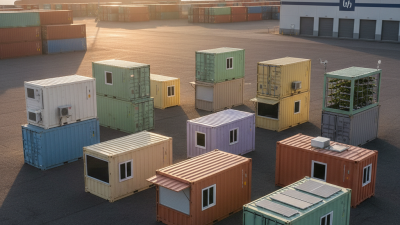
Shipping containers have transformed modern architecture in unexpected ways. These robust structures can serve multiple purposes while being cost-effective. Many architects use them to create unique spaces. From homes to cafes, the possibilities are endless. They can be stacked, arranged, and painted to create stunning facades. Yet, this innovation is not without its challenges.
Building with shipping containers often involves a steep learning curve. Proper insulation and ventilation are crucial for comfort. The containers are made of steel, which can trap heat in summer. This requires careful planning. Designers must consider local climates when constructing with these materials. While the aesthetic can be impressive, the functionality must also be addressed thoughtfully.
Communities around the world have embraced this trend, yet some projects fail to meet expectations. Improper planning can lead to structural issues or inadequate living conditions. It's vital for creators to learn from these experiences. Each innovative shipping container building can inspire others, but reflection on past mistakes is essential. The journey towards sustainable architecture is ongoing.
Exploring the Design Elements of Container Structures
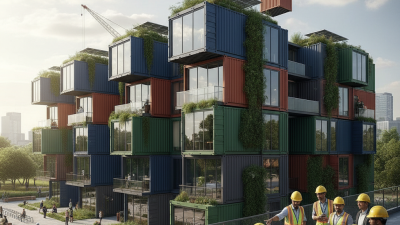
Shipping container buildings offer a fresh perspective on modern design. These structures showcase flexibility and creativity in architecture. Designers often play with different orientations and combinations of containers. This exploration leads to unique shapes and layouts. For example, stacking containers creates multi-level spaces. Large windows can be added for natural light. Architects often integrate sustainable materials too.
The color palette is another significant aspect. Bright, bold colors can make a statement. Some choose muted tones for a more subtle appearance. Landscaping plays an essential role in container design. Planting greenery around or on top of containers softens their industrial feel. Open outdoor areas encourage interaction and community. Containers can also be modified to include outdoor terraces. However, structural challenges can arise. For instance, insulation and ventilation require careful planning. Proper integration of design elements is crucial. Without it, these innovative buildings might not achieve their full potential.
Sustainability and Environmental Impact of Shipping Container Buildings
Shipping container buildings are gaining traction as a sustainable alternative in construction. According to a 2020 report by the Environmental Protection Agency (EPA), construction and demolition account for about 25% to 30% of the total waste in landfills annually. Shipping containers, often repurposed, can reduce this waste. Their steel structure offers durability and resilience while minimizing the need for new materials.
In terms of energy efficiency, a study by the International Journal of Environmental Science found that repurposing shipping containers can lead to a 30% reduction in carbon footprint compared to traditional building methods. These structures can also be designed to be energy-efficient, utilizing solar panels and natural ventilation to cut down on power consumption. However, the insulating properties of standard shipping containers can be poor, leading to thermal inefficiencies if not addressed properly.
Moreover, while many appreciate the aesthetic appeal of these edgy structures, the environmental impact of renovations must be considered. Treating containers with chemicals for cargo safety poses risks, with potential contamination issues. Balancing innovation and safety is crucial. The potential of shipping container buildings is promising, yet developers must reflect on how to overcome the challenges effectively.
Top 10 Innovative Shipping Container Buildings You Need to See
This chart illustrates the various innovative aspects of shipping container buildings, each rated on a scale from 1 to 10 based on their impact. The highest rating is in sustainability, reflecting the environmental benefits of using shipping containers for construction, while energy efficiency and recyclability also receive strong ratings, indicating their significant contributions to modern architectural practices.
Case Studies: Iconic Shipping Container Buildings Around the World
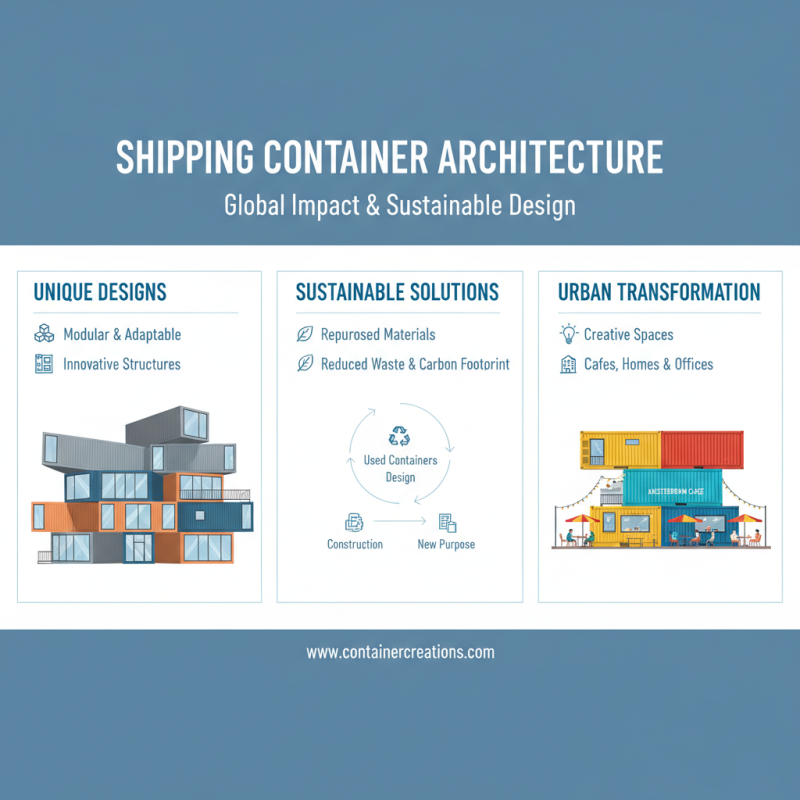
Shipping container buildings have gained worldwide attention. They offer unique designs and sustainable solutions. In many urban areas, these structures show how creativity can transform ordinary materials. Cities like Amsterdam house cafes made from bright containers. Their bold colors draw visitors in and create vibrant spaces.
In Australia, shipping containers form community hubs. They are versatile and flexible for various uses. Some serve as artist studios, while others host pop-up markets. However, challenges arise. Not all container designs are easy to construct. Problems with insulation and ventilation often exist. Balancing aesthetics with practicality is vital.
In Asia, innovative housing projects pop up, built from containers. They address housing shortages and create affordable living options. Yet, the question remains: Can these structures withstand extreme weather? Their durability may be a concern in tropical climates. Overall, shipping container buildings continue to inspire. However, the journey is not without its hurdles.
Future Trends in Shipping Container Architecture and Design
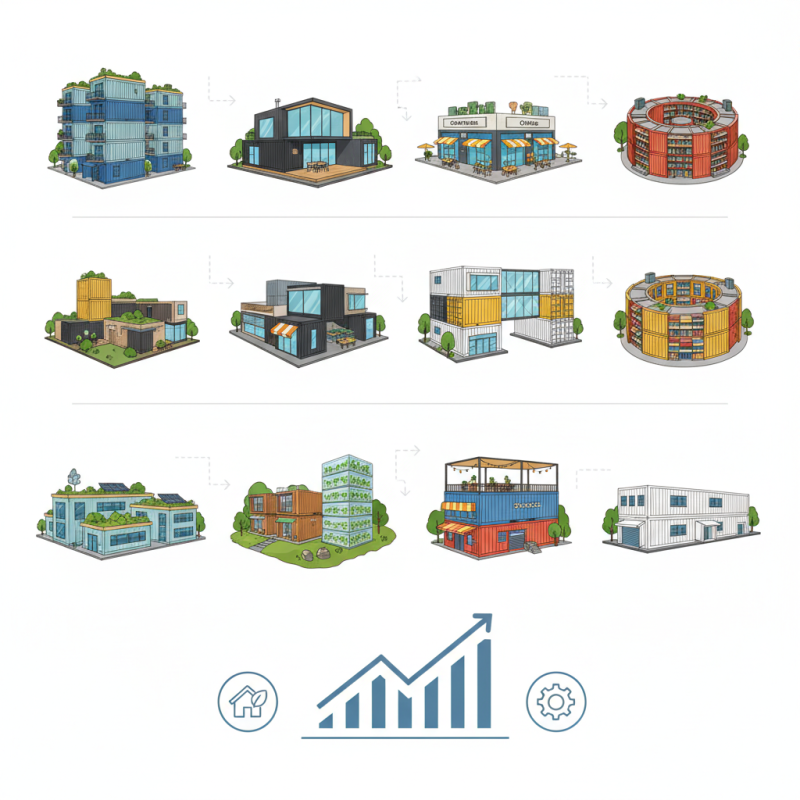
Shipping container architecture is gaining traction worldwide. These structures often reflect creativity and sustainability. Designers are now experimenting with modular designs that offer flexibility. They create spaces that can adapt to the needs of the occupants. The use of vibrant colors and unique shapes draws attention. Containers can be stacked or rearranged to form various configurations. This aspect allows for an innovative approach to urban planning.
One challenge lies in insulation and climate control. Containers are metal boxes, so maintaining temperature can be tough. Innovative solutions include green roofs and solar panels. These additions help turn containers into energy-efficient homes. However, retrofitting can be complex and costly. Many designs still grapple with these issues, requiring thoughtful consideration.
Another emerging trend is the use of shipping containers for community spaces. Art studios, cafes, and even offices are being constructed using these materials. They foster a sense of community and creativity. Yet, the aesthetic can feel industrial. Balancing functionality and beauty remains a key consideration in design. As architects push the boundaries, the future of shipping container buildings continues to evolve.