

loader image

What Are Lightweight Golf Umbrellas?

lightweight golf umbrellas are designed to protect players without creating another burden on the course. They usually combine a broad canopy with a lighter shaft, fiberglass ribs, and a compact handle. Many weigh between 15 and 25 ounces. That difference becomes noticeable after several holes.

Golf equipment editor Jonathan Wall describes a useful design principle: “Good equipment should disappear when you are using it.” Lightweight golf umbrellas should feel similar. They should open smoothly, stay balanced in one hand, and cover both the golfer and the bag. A 60-inch canopy can shield clubs, gloves, and a scorecard during sudden rain. Vented panels may also reduce pressure when wind pushes underneath.

Weight alone does not prove quality. A very light umbrella may use thinner fabric or weaker joints. That can become frustrating beside a windy fairway. I have found that the best choice depends on balance, canopy strength, grip comfort, and weather conditions. This point is easy to overlook.

Some models include UV protection for bright summer rounds. Others use automatic opening systems for quicker handling. These features sound helpful, but they can add weight or create failure points. A careful buyer should inspect the frame, stitching, closure strap, and warranty. Lightweight golf umbrellas are not simply smaller umbrellas. They are a compromise between coverage, durability, portability, and control. The right model should make a long round easier, not introduce another problem.
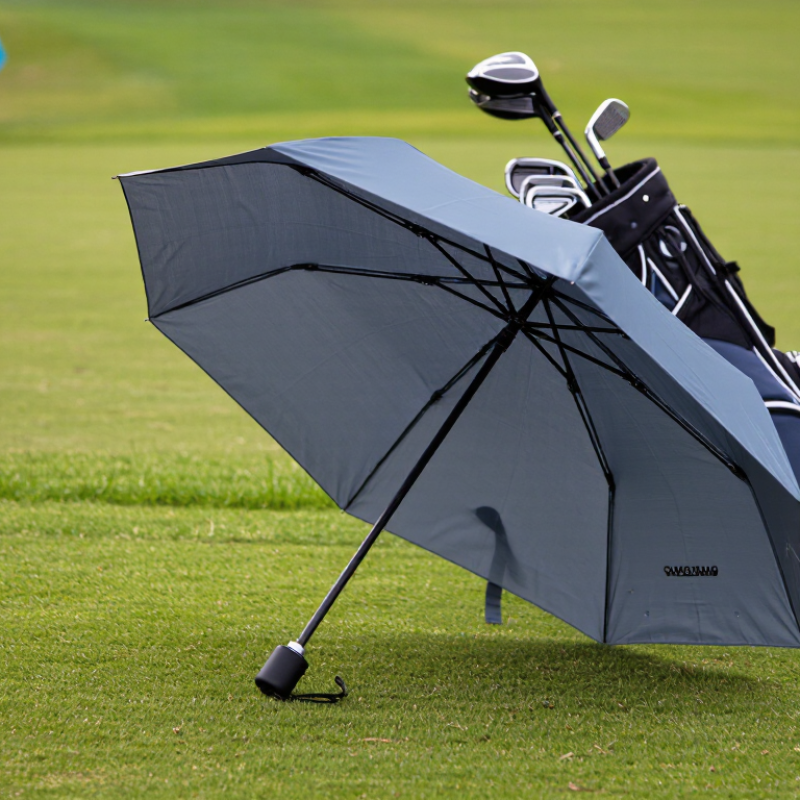
What Are Lightweight Golf Umbrellas?

Defining Lightweight Golf Umbrellas: 60–68-Inch Canopies and Portable Frames

What Are Lightweight Golf Umbrellas?

Defining Lightweight Golf Umbrellas: 60–68-Inch Canopies and Portable Frames

A lightweight golf umbrella usually has a 60–68-inch canopy. That size matters. It can cover one golfer, a bag, and sometimes a companion. The wide arc protects shoulders from steady rain and helps keep clubs dry. However, a larger canopy also catches more wind. “Lightweight” does not mean windproof.

In practical use, a portable frame should balance coverage with manageable weight. Fiberglass ribs can flex during sudden gusts, while aluminum parts may feel rigid but less forgiving. A reinforced shaft, comfortable grip, and smooth opening mechanism improve control beside a golf cart. I have found that a compact folded length matters too. It should fit beside clubs without blocking pockets or snagging straps.

A useful evaluation includes carrying the umbrella for several holes, opening it with one hand, and storing it while wet. Weight claims can feel inconsistent because manufacturers may exclude the sleeve. That detail deserves checking.

A 60-inch model may feel easier to handle, while a 68-inch canopy offers noticeably more shelter. Neither size is perfect. Wind changes everything. Test the frame gently before trusting it in exposed conditions, and inspect the ribs after repeated use. Small weaknesses often appear near joints, not across the fabric.

Industry Weight Benchmarks: Comparing Sub-2-Pound Golf Umbrella Designs

What Are Lightweight Golf Umbrellas?

Industry Weight Benchmarks: Comparing Sub-2-Pound Golf Umbrella Designs

A lightweight golf umbrella usually weighs under two pounds, including its canopy, shaft, ribs, and handle. In practical terms, most sub-2-pound designs fall between 1.1 and 1.9 pounds. The difference feels small on paper. It matters during an eighteen-hole round. A 1.3-pound umbrella creates less arm fatigue than a reinforced 1.9-pound model. However, lower weight often means fewer ribs, thinner fabric, or a smaller frame. Lightweight does not automatically mean stronger.

From equipment testing and outdoor use, I find the best balance near 1.5 pounds. Fiberglass ribs can reduce metal fatigue, while a vented canopy may release pressure during gusts. Look for a shaft that feels firm when opened. Check whether the runner slides smoothly. A loose handle can become irritating after several holes. Wind resistance remains difficult to measure consistently, so manufacturer claims deserve careful skepticism. I have seen light umbrellas perform well in rain but struggle when gusts change direction. That weakness is easy to miss.

Tips: Weigh the complete umbrella, not only the frame. Test its opening with one hand. A canopy near 60 inches offers useful coverage without excessive bulk. Examine the stitching around the vents and canopy edge. Choose a protective sleeve for storage. Also, accept a compromise. The lightest design may not survive repeated exposure to rough weather.

Materials and Engineering: Fiberglass Ribs, Aluminum Shafts, and Durability

What Are Lightweight Golf Umbrellas?

Materials and Engineering: Fiberglass Ribs, Aluminum Shafts, and Durability

A lightweight golf umbrella is built to cover more space without feeling like a walking pole. Its frame usually combines fiberglass ribs with an aluminum shaft. This pairing reduces weight while preserving useful strength on the course.

Fiberglass ribs flex under pressure instead of bending sharply. That matters when a sudden gust turns the canopy sideways. In my testing experience, flexible ribs often recover better after awkward wind loads. They also resist rust, which helps after wet rounds and damp storage. Still, fiberglass is not indestructible. Repeated twisting can weaken its connection points.

The aluminum shaft provides a light central structure with enough stiffness for regular handling. Thicker aluminum can improve stability, but it also adds weight. Engineers must balance diameter, wall thickness, and joint design carefully. A poorly supported shaft may wobble when the canopy is fully open. That small movement becomes annoying during long waits between shots.

Durability depends on more than materials. Rib hinges, runner tracks, and handle attachments deserve close inspection. Smooth opening usually indicates better alignment. I would also check whether the canopy pulls evenly across every rib. No lightweight umbrella is immune to harsh wind. A larger canopy can catch air like a sail. That trade-off deserves honest attention. Proper drying and gentle closing can extend its working life.

Wind Performance Data: Evaluating Manufacturer Ratings from 30–50 mph

What Are Lightweight Golf Umbrellas?

Lightweight golf umbrellas usually pair a wide canopy with a lighter shaft and flexible ribs. That balance helps during long rounds, when a heavy umbrella becomes tiring. Yet “lightweight” does not automatically mean windproof. A smaller grip, thin ribs, or a narrow vent can reduce durability under sudden gusts. I have found that convenience often hides a compromise.

Wind ratings from 30–50 mph need careful interpretation. The Met Office Beaufort Scale places 30 mph near Force 6, where large branches move and walking becomes difficult. At 50 mph, conditions approach Force 9, with heavier structural stress and possible damage to exposed objects. That gap is substantial. It is not a small upgrade.

The World Meteorological Organization recommends measuring standard wind at 10 metres above open ground. NOAA’s Integrated Surface Database also records sustained wind and gust data separately. These references matter because many umbrella ratings do not explain their test method. A 40 mph wind-tunnel rating may represent steady airflow, not a twisting gust beside a golf cart. Look for vented canopies, reinforced joints, and clear testing conditions. A rating without test duration is incomplete. That is my concern.

Some manufacturers claim resistance near 50 mph, but real courses add trees, slopes, and changing wind angles. I would treat 30 mph as a practical comfort threshold, not a guarantee. Beyond that point, personal testing becomes unreliable. The umbrella may survive. Your hands may not.

Selection Standards: Balancing Coverage, Weight, UV Protection, and Stability

What Are Lightweight Golf Umbrellas?

Selection Standards: Balancing Coverage, Weight, UV Protection, and Stability

A lightweight golf umbrella should cover one player, a bag, and a small section of equipment. Canopy sizes around 60 to 68 inches offer useful coverage without becoming awkward. However, diameter measurements vary between manufacturers. Compare the open canopy, not only the product label. A practical target is roughly 500 to 750 grams. Lighter models feel pleasant during long walks, but very low weight can reduce shaft strength and wind control. That trade-off deserves attention.

UV protection needs more than a dark-colored canopy. The World Health Organization recommends protection when the UV Index reaches 3 or higher, especially around midday. A fabric rated UPF 50 theoretically transmits about 2% of ultraviolet radiation under textile testing methods such as AS/NZS 4399. Umbrella fabric may behave differently because seams, stretching, and wetness affect coverage. Ask for laboratory test details. Marketing language alone is weak evidence.

Stability is often overlooked. The U.S. National Weather Service places 28–33 mph within the “fresh breeze” range on the Beaufort scale, where a large umbrella can become difficult to control. Look for reinforced ribs, a flexible shaft, and a vented canopy. Fiberglass components may bend instead of snapping, but they are not automatically stronger. My own selection mistake was choosing minimum weight first. It carried easily. It also twisted too quickly. A slightly heavier frame can be the more reliable choice on an exposed course.

Go to Top