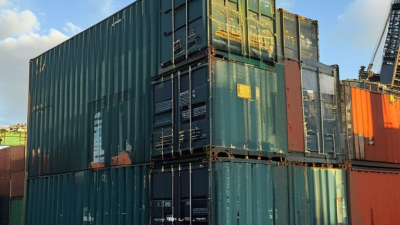
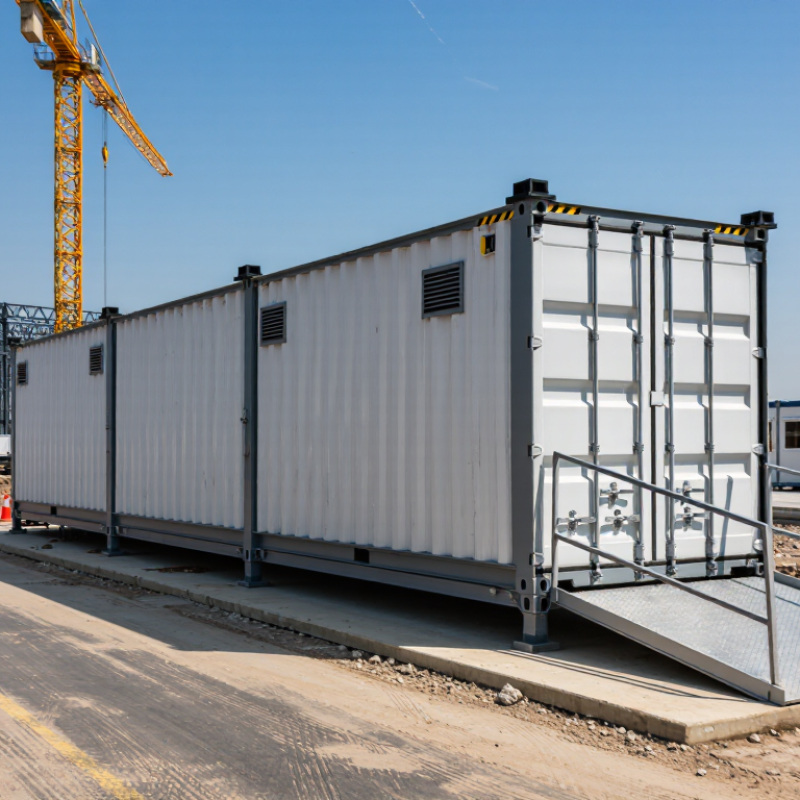
A mobile container is more than a steel box with wheels. It is a movable storage, transport, or workspace unit designed for changing locations. Its value becomes clear beside a construction site, warehouse, retail outlet, or temporary office. Doors, locking bars, ventilation, ramps, and lifting points affect daily performance.
The definition is not perfectly fixed. Some suppliers mean portable storage containers, while others include containerized cabins and transport units. ISO 668 provides internationally recognized container dimensions, helping equipment move through established logistics systems. UNCTAD’s Review of Maritime Transport 2024 reports that global seaborne trade exceeds 12 billion tonnes annually. That scale explains why standardized containers remain important. However, a mobile container usually serves a shorter, more flexible journey than a conventional freight box.
Marc Levinson, author of The Box, famously observed that “the container made the modern world.” His point still matters. A mobile container can reduce handling, protect inventory, and create usable space within hours. It may arrive on a flatbed, settle on prepared ground, and leave without permanent construction. Small details matter. Uneven ground can damage doors. Poor airflow can create condensation. Weak site planning can increase delivery costs.
The World Bank’s Logistics Performance Index 2023 also highlights infrastructure, tracking, and delivery reliability as practical logistics priorities. These measures help explain how a mobile container works beyond its physical shell. This guide examines its structure, movement, applications, and limitations. Some claims deserve caution. A mobile container is efficient, but it is not automatically sustainable, secure, or suitable for every site.
A mobile container is an isolated software environment operating inside a smartphone or tablet. It keeps selected applications, files, and settings separate from the device’s wider system. Its core purpose is controlled access. Users can work with sensitive information without exposing every personal photo, message, or application.
In practice, the container creates boundaries around business data. An administrator may require a screen lock, encryption, or remote removal for that data. The device still runs normally outside the container. A user can open an approved work application, edit a document, and save it within the protected area. Copying that document into an unmanaged application may be blocked.
This separation also supports flexible work. People can use one device in different roles, reducing equipment costs and administrative effort. Security teams can apply updates, permissions, and access rules to the container itself. However, a container is not a perfect shield. Weak passwords, outdated software, or careless sharing can still create risks. The term is also not completely standardized, so its functions may differ between systems. Clear policies and regular testing remain necessary. A practical review should check data storage, backup behavior, offline access, and what happens when the device is lost. Some designs feel secure but provide limited protection in real conditions. That gap deserves attention.
What Is a Mobile Container and How Does It Work?
Key Components and Structural Design
A mobile container is a prefabricated unit designed for relocation. It may support temporary offices, storage, workshops, or compact technical systems. Its structure usually begins with a steel frame, corner posts, lifting points, insulated wall panels, and a sealed roof. ISO 668 defines common container dimensions, including a 20-foot unit measuring about 6.06 metres long and 2.44 metres wide. These fixed dimensions simplify transport planning and site installation.
The floor carries concentrated loads from equipment, shelving, or batteries. Reinforced cross-members help prevent bending during lifting and movement. Wall insulation controls heat transfer, while ventilation openings manage moisture and internal temperature. Electrical systems often include distribution boards, grounding, emergency lighting, and cable channels. For technology-focused units, cooling capacity deserves careful calculation. The International Energy Agency reported that global data-centre electricity use could exceed 1,000 terawatt-hours annually by 2026. Even a small mobile unit can create serious heat loads. Design assumptions can be wrong.
Tips: Check weight distribution before loading. Leave service space around panels and cooling equipment. Test seals after transport, not only before delivery. Local weather also matters; wind, snow, and humidity can expose weak joints quickly. A visually strong container may still fail through poor airflow or uneven foundations. Engineers should verify structural drawings, lifting procedures, fire protection, and electrical performance with qualified inspectors. Practical experience shows that mobility is useful, but repeated relocation increases fatigue at hinges, welds, and connection points.
A mobile container is a reinforced unit moved by truck, then positioned where storage or transport is needed. Its operation begins with a site check. The operator measures driveway width, overhead clearance, ground strength, and turning space. Small details matter. A soft shoulder can shift under several tonnes of steel.
The container is delivered on a hydraulic lifting system. The truck aligns beside the prepared area and lowers the unit gradually. Staff inspect the floor, doors, locking points, and ventilation openings. Cargo is then loaded with weight spread across the base. Heavy items stay low and near the center. This reduces movement during transport. ISO 668 defines standard container dimensions, while ISO 1496-1 covers structural testing requirements for freight containers. These standards support safer handling, but they do not replace a physical inspection.
When the container must move again, workers secure loose items, close the doors, and check axle or lifting limits. The truck raises the unit, stabilizes it, and carries it to another location. UNCTAD’s Review of Maritime Transport 2024 states that maritime shipping carries over 80% of global merchandise trade by volume, showing why standardized units remain valuable across transport networks. Still, mobile containers are not effortless. Uneven loading, poor drainage, or a rushed clearance check can create real problems. The process is practical, but not foolproof.
| Step | Operational Stage | What Happens | Key Components or Conditions | Typical Result |
|---|---|---|---|---|
| 1 | Requirement Planning | The user defines the container’s purpose, payload, destination, access requirements, and expected operating conditions. | Payload type, total weight, available space, handling method, travel route, and environmental exposure. | A suitable container configuration is selected. |
| 2 | Container Preparation | The empty unit is inspected, cleaned, and prepared before loading. Doors, seals, floor condition, lifting points, and structural surfaces are checked. | Undamaged frame, functional doors, intact seals, dry interior, and safe lifting or connection points. | The container is ready for loading. |
| 3 | Loading and Weight Distribution | Cargo is placed inside so that the load remains within the rated capacity and the center of gravity stays as balanced as practical. | Payload mass, axle or support limits, floor strength, clearance, and even weight distribution. | The load is stable and suitable for transport. |
| 4 | Cargo Securing | Items are restrained to prevent shifting, tipping, rolling, or impact during movement. | Blocking, bracing, straps, tie-down points, anti-slip materials, and protective packaging. | Cargo movement is minimized during handling and travel. |
| 5 | Closure and Verification | Doors, covers, or access panels are closed and secured. The operator confirms that no item obstructs the closure or exceeds the permitted dimensions. | Door locks, latches, seals, external dimensions, total gross weight, and visible safety markings. | The unit is closed and ready for pickup. |
| 6 | Connection to a Mobile Platform | The container is placed on or connected to a movable platform, vehicle, trailer, chassis, skid, or lifting system designed to support it. | Compatible connection points, rated equipment, level placement, locking devices, and adequate ground conditions. | The container can be moved safely as one load. |
| 7 | Movement and Handling | Mechanical equipment moves the container to a new location. Depending on the design, it may be lifted, rolled, pulled, or transported on a road-going platform. | Load rating, braking or stabilization system, route clearance, turning space, surface condition, and operator control. | The container reaches its destination without unloading the contents. |
| 8 | Positioning and Stabilization | At the destination, the container is placed on a suitable surface and stabilized before access or use. | Level ground, support points, wheel chocks or stabilizers, clearance, drainage, and local safety requirements. | The unit is secure and usable at the new location. |
| 9 | Access and Operation | Users open the container and access its contents or operate installed equipment, such as storage, workspace, utility, or temporary service systems. | Ventilation, lighting, electrical safety, weather protection, fire precautions, and safe entry paths. | The mobile container performs its intended function. |
| 10 | Relocation or Return | When the task is complete, contents are secured again and the same inspection, connection, and transport process is repeated for relocation or return. | Updated load condition, route planning, equipment availability, and pre-movement inspection. | The container is ready for another deployment cycle. |
Note: Actual dimensions, maximum payload, lifting methods, connection systems, and transport requirements vary by container design and applicable local regulations. Always follow the unit’s technical documentation and the equipment manufacturer’s rated limits.
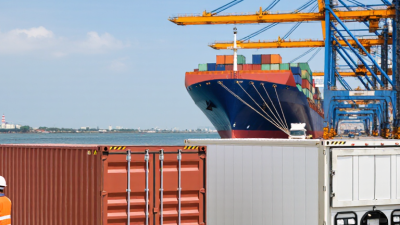
A mobile container is a standardized steel unit that moves between ships, trucks, railways, and temporary sites. Its corner fittings lock onto compatible lifting equipment, while doors, seals, and a rigid frame protect the cargo. The label sounds simple. The engineering is not.
Common types serve different conditions. Dry containers carry packaged goods and machinery. Refrigerated containers control temperature for food, medicine, and other sensitive products. Open-top units handle tall cargo, such as timber or industrial equipment. Tank containers transport approved liquids and gases under strict safety standards. Modular containers can become site offices, storage rooms, clinics, or emergency classrooms. ISO 668 defines key container dimensions, supporting safer global handling. UNCTAD’s Review of Maritime Transport 2024 reports roughly 858 million twenty-foot-equivalent units moved through ports in 2023. That scale explains why standardization matters.
Applications extend beyond ports. Construction teams use mobile containers for tools, secure material storage, and temporary workspaces. Farmers may use refrigerated units near harvest areas, reducing long journeys before cooling. Disaster-response planners can deploy modular units as medical stations or supply hubs. However, practical performance depends on insulation, ventilation, floor loading, power supply, and local weather. A container is mobile, but not endlessly flexible. Poor placement can cause heat buildup, water intrusion, or unsafe access. The World Bank’s Logistics Performance Index 2023 also shows that border delays and infrastructure quality still affect delivery reliability. This is where field inspection matters more than attractive specifications.
A mobile container is a standardized, relocatable unit used to transport, store, or deploy goods and equipment. Its capacity and suitability depend largely on the container type and internal volume.
The chart compares typical internal volumes of common ISO container types. Standard units are often used for general cargo, high-cube units provide additional vertical space, and longer high-cube units are useful for bulky equipment, modular workspaces, and mobile storage applications. Actual dimensions may vary slightly by manufacturer and specification.
A mobile container is a steel unit designed for transport, storage, or temporary workspace. It moves by truck, rail, or ship using standardized lifting points. Many units follow ISO 668 dimensions, improving compatibility across transport systems. UNCTAD’s Review of Maritime Transport 2023 reports that over 80% of global merchandise trade by volume travels by sea. This explains why container-based logistics remains highly practical. Their main benefits include rapid deployment, weather resistance, stackability, and predictable handling costs. They can support construction sites, emergency storage, and short-term operations.
Limitations become clear on difficult sites. A container needs firm ground, access for lifting equipment, and enough turning space. Steel walls also create heat, condensation, and poor airflow without insulation or ventilation. Local planning rules may restrict placement, electrical work, or long-term occupation. Safety requires more than a strong box. OSHA guidance highlights struck-by hazards, falls, unstable loads, and caught-between injuries around material handling. Improper lifting can twist corner fittings or shift the load. The model is efficient, but not flawless.
Tips: Inspect doors, floors, seals, and lifting points before every move. Keep people outside the crane’s exclusion zone. Use level supports, secure internal cargo, and check ventilation before entry. A documented inspection follows ISO 1496 testing principles and creates useful evidence. Do not assume a clean exterior means a safe interior. That assumption needs challenging.
Sources: UNCTAD Review of Maritime Transport 2023; OSHA material-handling guidance; ISO 668 and ISO 1496.

© Copyright 2025 | CONTAINERED – SHIPPING CONTAINER HOMES IN MELBOURNE