

Aluminum composite panels now serve façades, interiors, signage, transport, and modular construction. Their smooth surfaces may look similar, but their cores, coatings, bonding methods, and testing records differ greatly. Choosing the right Aluminum Composite Panel Manufacturer therefore requires more than comparing prices or glossy project photos.
Industry reports show why this market deserves careful review. Grand View Research’s Aluminum Composite Panels Market analysis identifies construction activity, renovation, and lightweight façade systems as major growth drivers. Fortune Business Insights also highlights demand for durable, weather-resistant, and energy-conscious cladding solutions. These trends sound promising, but market growth does not guarantee equal manufacturing quality. It never does.
This guide examines ten manufacturer types, including standard polyethylene-core producers, fire-retardant specialists, A2 mineral-core manufacturers, PVDF coating experts, interior panel suppliers, signage-focused factories, OEM partners, custom fabricators, regional producers, and vertically integrated groups. Each type reflects different capabilities. A façade project near a coastal road may need stronger corrosion resistance. A transit station may require documented fire performance and traceable batch testing. A retail sign may prioritize color consistency and fast replacement.
Reliable evaluation should include coating thickness, core composition, panel flatness, peel strength, fire classifications, warranty terms, and quality-control procedures. EN 13501-1 and ASTM-related test references can support comparison, but certificates still require verification. Some suppliers present impressive documents without explaining testing conditions. That is a weakness worth noticing.
The rankings are practical, not absolute. Project specifications, climate, budget, and local compliance requirements can change the best choice. Good sourcing begins with evidence, not assumptions.
Top 10 Types of Aluminum Composite Panel Manufacturers
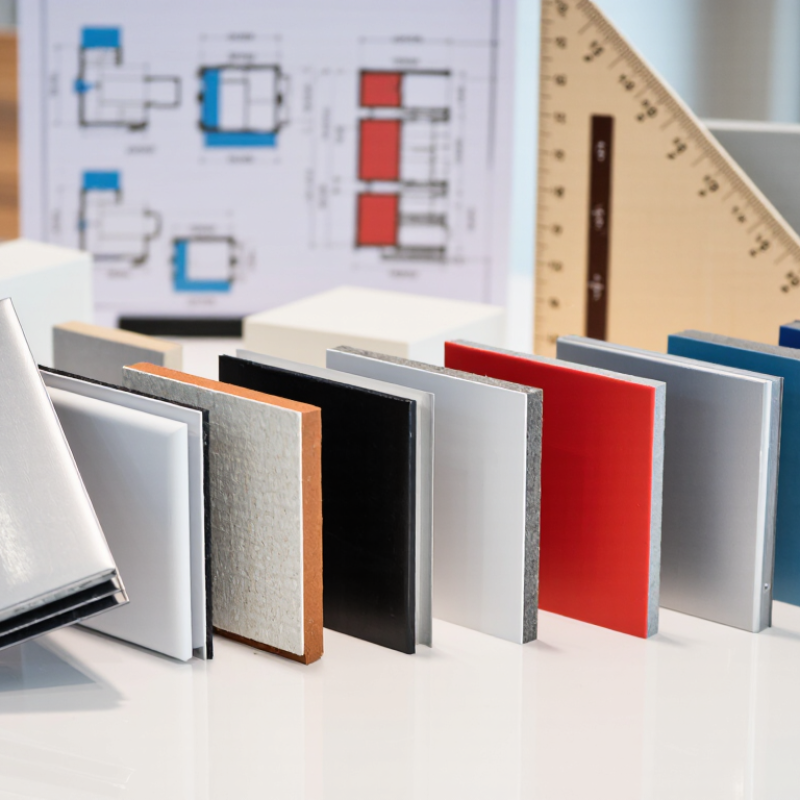
Aluminum composite panel manufacturers are often classified by core material and panel structure. The ten main types include PE-core, fire-retardant mineral-core, A2 mineral-core, honeycomb-core, corrugated-core, and solid-aluminum manufacturers. The remaining four focus on standard flat panels, curved panels, perforated panels, and insulated sandwich structures. This classification helps buyers compare fire performance, weight, stiffness, and fabrication needs.
A 2024 market report from Grand View Research estimated the global aluminum composite panel market at more than USD 6 billion in 2023. It also identified construction demand as a major growth driver. PE-core panels remain lightweight and economical, but they need careful fire assessment. Mineral-core panels usually provide stronger fire resistance. A2 cores contain mostly inorganic material and are commonly specified for stricter building requirements. Honeycomb and corrugated structures reduce weight while improving rigidity. The difference is visible during installation: a large panel should resist oil-canning under changing daylight.
Structural design changes manufacturing equipment. Curved-panel producers need controlled bending and stable coating adhesion. Perforated-panel producers must manage edge deformation and water entry. Insulated structures require consistent bonding across the entire surface. Testing should reference recognized methods, such as EN 13501-1 or ASTM E84, where applicable. Reports are useful, but they cannot replace project-specific certificates.
The classification is not perfectly clean. Some manufacturers produce several core types in one facility. Others advertise “fire-safe” panels without explaining test scope, thickness, or mounting conditions. That is where technical review matters. A reliable supplier should provide core density, aluminum thickness, coating data, tolerances, and traceable test records before production.

Types classified by core material and panel structure
The chart compares common aluminum composite panel types by representative nominal panel thickness. PE and fire-retardant mineral-core panels are widely used for general architectural cladding, while A2 mineral-core, honeycomb, corrugated, and solid-aluminum structures are selected when higher fire performance, rigidity, or reduced weight is required. Thickness values represent commonly specified product configurations rather than market-share data.
The top 10 aluminum composite panel manufacturer types are best compared by coating and finish. PE-coated manufacturers serve interior walls, signs, and sheltered façades. PVDF-coated manufacturers target demanding exterior projects. FEVE-coated manufacturers offer deeper gloss and stronger color retention. Nano-coating manufacturers add easier-cleaning surfaces. These categories often overlap.
Anodized-finish manufacturers produce metallic, durable surfaces with a natural aluminum appearance. Brushed-finish manufacturers create fine linear textures for elevators, entrances, and retail interiors. Mirror-finish manufacturers use reflective skins for visual impact, though scratches remain a concern. Wood-grain manufacturers use printed or textured coatings to imitate timber. Stone-finish manufacturers reproduce granite or marble effects. Solid-color manufacturers focus on consistent tones and economical project matching.
Market data supports this segmentation. Grand View Research estimated the global aluminum composite panels market at over USD 6 billion in 2023, with continued growth through 2030. A MarketsandMarkets analysis also identifies construction and façade applications as major demand areas. However, reports classify coatings differently, so direct comparisons can mislead. That matters.
In practice, coating thickness, aluminum alloy, core composition, curing control, and batch testing separate reliable manufacturers from attractive catalogues. I have seen finish samples appear identical under showroom lighting, yet differ outdoors after one summer. PVDF is not automatically the best choice. PE can be practical for interiors, while a textured finish may hide minor handling marks better than a mirror surface. Supplier quality records, weathering data, and project references deserve more attention than color charts.
Top 10 Types of Aluminum Composite Panel Manufacturers
Aluminum composite panel producers are best compared by application, not factory size. The ten main types serve architectural façades, commercial interiors, signage, transport, modular buildings, industrial enclosures, cleanrooms, residential projects, fire-rated construction, and renovation work.
Architectural façade manufacturers usually offer wide panels, stable coatings, and tested fixing systems. Interior-focused producers often prioritize texture, easy cutting, and low-emission finishes. Transport suppliers need lightweight cores and strong vibration resistance. Industrial producers typically develop panels for warehouses, equipment rooms, and harsh environments. Fire-rated manufacturers invest heavily in mineral cores and independent certification. These differences matter during specification.
The International Aluminium Institute reported about 70.6 million tonnes of primary aluminium production in 2023. This scale supports broad panel availability, but it does not guarantee consistent quality. The International Energy Agency states that buildings consume about 30% of global final energy. Better insulated envelope systems can therefore support energy goals, when installation is correct. That last condition is often underestimated.
Tips: Ask manufacturers for project references, coating warranties, core classifications, and test dates. Check panel flatness under real lighting. A sample may look perfect in a showroom, yet reveal waviness outdoors. Also review recycled content and regional supply records. Sustainability claims need evidence. Not every “green” panel performs equally.
Top 10 Types of Aluminum Composite Panel Manufacturers
Manufacturers Compared by Production Scale and Customization
Aluminum composite panel manufacturers differ sharply in production capacity and design flexibility. Large integrated producers serve national projects with continuous lines, automated coating, and stable monthly output. Regional high-volume factories usually offer shorter delivery routes, but their color ranges may be narrower. Specialized manufacturers focus on fire-rated panels, architectural finishes, signage panels, interior panels, or lightweight cores. Smaller workshops often handle low-volume orders, unusual dimensions, and rapid prototypes. Eco-focused producers may use recycled aluminum or lower-impact coatings, though environmental claims require verified documentation.
Tips: Ask for recent test reports, coating specifications, sample panels, and dimensional tolerances. Compare actual production capacity, not only catalog claims. A factory may promise custom colors, yet minimum order quantities can make small projects expensive. Inspect packaging and edge protection too. Damage often begins before installation.
For demanding projects, customization should be measured beyond color selection. Check available core thicknesses, panel widths, surface textures, bending limits, and machining support. Request a physical sample under daylight and indoor lighting. Review batch consistency before approving full production. My practical experience suggests that communication speed often predicts project reliability better than factory size. Still, this is not absolute. A smaller supplier may provide stronger technical attention, while a large plant may offer better process control. Always verify both through references, inspection records, and a controlled trial order.
Choosing among aluminum composite panel manufacturers requires more than comparing catalog prices. Start with production experience, not polished claims. Ask how long the factory has made panels. Request project records with dates, climates, and panel thicknesses. A reliable supplier should explain core materials, coating systems, surface preparation, and bonding controls clearly. Vague answers matter.
Evaluate documented testing for fire performance, peel strength, impact resistance, coating adhesion, and weathering. Check whether reports identify the exact panel structure, batch, and test standard. Independent laboratory evidence carries more weight than certificates with missing details. Visit the plant if possible. Observe coil storage, protective film application, cutting accuracy, and quality checkpoints. Dust near bonding equipment is not a minor detail.
Technical support also reveals competence. Ask for installation guidance, compatible sealants, expansion-joint recommendations, and a response process for damaged sheets. Request samples from current production. Inspect flatness, corners, color consistency, and film removal. Confirm capacity, lead times, packaging, and traceability before signing. Cheap panels can become expensive after rework. I would not treat every certificate as proof of reliability; documents can age, and test conditions may not match the building site. The evaluation should remain practical, evidence-based, and slightly skeptical.
| Rank | Manufacturer Type | Typical Product Focus | Common Core Options | Typical Production Strength | Key Evaluation Criteria | Relevant Standards or Tests | Best Fit for Buyers | Evaluation Priority |
|---|---|---|---|---|---|---|---|---|
| 1 | Integrated ACP Producers | Complete production from aluminum coil preparation and coating to panel lamination, cutting, and finishing. | PE PVDF FR mineral core | Strong process control, stable specifications, and higher production consistency. | In-house quality control, coating uniformity, core composition, dimensional tolerance, production capacity, and traceability. | ASTM E84, EN 13501-1, ASTM D1781, ISO 9001, and applicable local building-code requirements. | Large construction projects, repeat orders, and buyers requiring consistent batch quality. | Very High |
| 2 | Fire-Retardant ACP Manufacturers | Panels designed to reduce flame spread and improve fire performance in building façades and interiors. | Mineral-filled core A2 core FR core | Specialized core formulation, controlled bonding, and documented fire-test performance. | Fire classification, smoke production, core mineral content, panel thickness, adhesive behavior, and test-report validity. | EN 13501-1, ASTM E84, NFPA 285 where applicable, and project-specific fire regulations. | High-rise façades, public buildings, transportation facilities, and projects with strict fire requirements. | Very High |
| 3 | Architectural Finishes Specialists | Decorative panels with wood, stone, metallic, brushed, mirror, solid-color, and custom surface effects. | PE PVDF Anodized-look | Broad color selection, surface customization, and visual consistency across project batches. | Color difference, gloss level, coating adhesion, weathering resistance, scratch resistance, and sample-to-production matching. | ASTM D3359, ASTM D2244, ASTM D523, AAMA 2604, and AAMA 2605 when applicable. | Signature façades, retail interiors, hospitality projects, signage, and design-led applications. | High |
| 4 | Standard Building-Envelope Suppliers | Common façade, soffit, canopy, column-cover, and interior wall-cladding panels. | PE core FR core | Efficient production of standard thicknesses, widths, lengths, and commonly requested colors. | Panel flatness, thickness tolerance, coating durability, sheet availability, packaging, and delivery reliability. | ASTM D1781, ASTM D3359, ASTM E84, and applicable aluminum and construction specifications. | Commercial buildings, residential developments, renovation work, and general façade packages. | High |
| 5 | Custom Fabrication Manufacturers | CNC-cut panels, routed-and-returned panels, folded shapes, perforated panels, and project-specific assemblies. | PE FR A2 | Engineering support, digital fabrication, precise routing, bending, drilling, and pre-assembly. | Drawing interpretation, CNC accuracy, edge quality, corner strength, installation tolerances, and prototype approval. | Project specifications, shop-drawing requirements, ASTM D1781, and applicable façade-system standards. | Complex façades, irregular geometries, prefabricated systems, and projects with limited site fabrication. | High |
| 6 | Signage and Display Panel Producers | Lightweight panels for signs, directories, exhibition systems, retail displays, and visual communication structures. | PE core FR core | Fast cutting, easy machining, smooth surfaces, and compatibility with printed or applied graphics. | Surface smoothness, print adhesion, flatness, cutting quality, color stability, and indoor or outdoor suitability. | ASTM D3359, ASTM D2244, ASTM D523, and relevant fire requirements for public interiors. | Sign manufacturers, exhibition contractors, retail fit-outs, and short-cycle display production. | Medium to High |
| 7 | Interior and Furniture Panel Manufacturers | Wall panels, partitions, column covers, cabinet components, ceilings, and decorative interior elements. | PE FR mineral core | Fine surface finishing, lightweight construction, repeatable color production, and easy fabrication. | Indoor emissions, surface durability, cleanability, scratch resistance, dimensional stability, and fire performance. | ASTM E84, EN 13501-1 where required, ASTM D3359, and project indoor-air-quality specifications. | Offices, airports, retail spaces, educational facilities, healthcare interiors, and furniture applications. | Medium to High |
| 8 | Sustainable and Recycled-Content Producers | Panels incorporating recycled aluminum, recycled polymer content, low-waste production, or environmental documentation. | Recycled PE Mineral core Recycled aluminum | Material-efficiency programs, documented sourcing, waste reduction, and end-of-life planning. | Verified recycled content, environmental product data, durability, recyclability, supply-chain records, and consistent quality. | ISO 14001, ISO 14021, Environmental Product Declarations, and applicable green-building documentation. | Green-certified buildings, public procurement, corporate sustainability projects, and circular-design programs. | High |
| 9 | Regional Project and Stock Suppliers | Locally stocked standard panels, cut-to-size services, accessory coordination, and regional delivery. | PE FR PVDF | Short lead times, local inventory, flexible order quantities, and responsive technical support. | Stock accuracy, delivery performance, replacement policy, local compliance, packaging, and technical documentation. | Applicable national standards, ASTM or EN test reports, and project-specific documentation. | Renovation projects, urgent replacement work, small and medium orders, and geographically constrained sites. | Medium to High |
| 10 | Export-Oriented OEM and Private-Label Manufacturers | Contract manufacturing, customized specifications, neutral packaging, private-label supply, and international shipment. | PE FR A2 PVDF | Scalable production, specification customization, export packaging, and multi-market documentation. | Factory audit results, minimum order quantity, quality agreements, inspection procedures, logistics capability, and document control. | ISO 9001, destination-market fire and coating standards, third-party inspection, and agreed product specifications. | Distributors, building-material importers, private-label programs, and multi-country procurement. | High |

© Copyright 2025 | CONTAINERED – SHIPPING CONTAINER HOMES IN MELBOURNE