loader image

China Best Large Shipping Container Suppliers?

Choosing China’s best large shipping container suppliers requires more than comparing catalog prices. A reliable supplier must understand cargo weight, stacking pressure, corrosion exposure, door alignment, and the realities of international transport. This guide examines manufacturers that produce a large shipping container for ports, warehouses, construction sites, and specialized logistics operations. It focuses on practical evidence, not impressive claims.

Supplier evaluation begins with factory experience and production control. Buyers should review steel grades, welding methods, coating systems, floor materials, and container dimensions. Factory photographs help, but independent inspections provide stronger evidence. Ask for production samples, inspection records, test reports, and clear tolerance requirements. A professional supplier should explain how containers are checked before loading. Details matter.

Small defects become expensive.

Communication also reveals reliability. Does the supplier answer technical questions clearly? Can it confirm delivery schedules, spare parts, warranty terms, and export documentation? Some companies offer low prices but provide vague specifications. That weakness deserves attention. A strong supplier should support customization without hiding limitations. It should also understand relevant international standards and the destination country’s import requirements. However, no supplier is perfect, and even experienced factories can face delays, material changes, or quality variation. Buyers should therefore use written contracts, pre-shipment inspections, and staged payments where appropriate. This article compares key capabilities, manufacturing evidence, and buyer considerations, helping readers make a more informed decision when sourcing large shipping containers from China.
China Best Large Shipping Container Suppliers?

What Defines a Large Shipping Container Supplier?

A large shipping container supplier is defined by more than factory size or a polished website. It should control steel sourcing, welding, coating, inspection, and export documentation. UNCTAD’s Review of Maritime Transport 2024 reported global maritime trade at about 12.3 billion tons in 2023. That scale demands suppliers with stable production capacity and dependable delivery systems. Large suppliers should provide ISO-based quality records, CSC-related compliance documents, and traceable container numbers. They should also explain steel grades, floor loading, corner-post strength, and paint performance clearly. Vague answers are warning signs.

Capacity must be measurable. Buyers should request monthly output, inspection methods, rejection rates, and loading photographs. The World Shipping Council notes that containers are central to modern liner shipping, where operational consistency affects ports, rail networks, and warehouses. A capable supplier therefore plans around production schedules, vessel cut-offs, inland transport, and seasonal material shortages. It should offer standard sizes, specialized configurations, spare parts, and responsive after-sales support. Customization matters, but it should not weaken structural safety.

The cheapest quotation is rarely the complete cost. Freight, inspection, repairs, delays, and replacement risks can change the result. No supplier is perfect. Even a large factory may struggle during steel-price spikes or peak export seasons. That weakness deserves honest discussion, not marketing language. A serious evaluation combines factory audits, sample testing, financial checks, and references from comparable orders. Reliability grows from evidence.
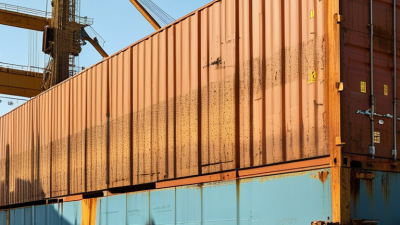

Leading Regions for Large Container Manufacturing in China

China’s large shipping container industry is concentrated near major steel, port, and logistics clusters. UNCTAD’s Review of Maritime Transport 2024 recorded China at roughly one-third of global container port throughput in 2023. That scale supports faster material sourcing, testing, and export handling.

Jiangsu is a major manufacturing zone for 40-foot and 45-foot high-cube containers. Nantong and nearby industrial cities offer steel-processing capacity, inland transport, and access to the Yangtze River corridor. Zhejiang, especially around Ningbo, benefits from a strong export ecosystem and deep-water shipping connections. Shandong, with production activity near Qingdao, combines steel supply with established port services. Guangdong remains useful for southern distribution, custom fabrication, and shorter routes to Southeast Asian markets.

Drewry industry research has consistently shown China producing more than 95% of the world’s standard dry freight containers. That figure explains the depth of its supplier network, but it should not end the evaluation. Capacity is not quality. Buyers should inspect weld consistency, corner-casting accuracy, coating thickness, door compression, and factory test records. A large container may look finished while hiding weak drainage or uneven flooring. Small details matter.

Regional strengths can also shift with steel prices, energy costs, and port congestion. Jiangsu may offer scale, while Guangdong may reduce delivery time for southern routes. The best sourcing decision depends on specifications, inspection access, and the final destination—not only the lowest quotation.

Types and Specifications of Large Shipping Containers

Large shipping containers are chosen by cargo size, handling method, and route requirements. The 40-foot standard container suits pallets, machinery, and general cargo. A 40-foot high-cube container adds about 30 centimeters of internal height. This extra space helps with tall cartons and bulky equipment. For larger loads, the 45-foot high-cube model offers more usable volume, but terminal and road limits must be checked.

Special cargo needs different designs. Open-top containers allow cranes to load oversized items from above. Flat racks support heavy machinery and wide structures, with collapsible ends on some models. Refrigerated containers maintain controlled temperatures for approved temperature-sensitive goods. Check external dimensions, internal dimensions, door opening, maximum gross mass, tare weight, and payload. These figures can vary by container design and manufacturing tolerance. A perfect specification sheet is not enough. Inspect floor strength, door seals, corner posts, and visible corrosion before purchase. The identification plate and inspection documents should also match the actual unit.

Tips: Measure the cargo first, including packaging and lifting clearance. Leave practical space for safe loading. Confirm the container’s permitted weight for the intended route. Ask for recent photos of the roof, floor, and locking bars. Small errors matter. In my view, buyers sometimes focus on volume and overlook door height or forklift access. That mistake can create delays, extra handling, and unnecessary repair costs.

How to Evaluate Chinese Container Suppliers

Choosing among Chinese large shipping container suppliers requires more than comparing quotations.

Start by checking manufacturing experience, production capacity, and export records. Ask for factory photographs, welding procedures, material specifications, and inspection reports. Reliable suppliers should explain steel grades, coating systems, door seals, floor treatment, and container dimensions clearly. Vague answers deserve caution.

Request samples or arrange an independent factory inspection before placing a large order. Check weld consistency, corner castings, door alignment, paint thickness, and drainage openings. A supplier may show a polished showroom, but production lines reveal more. Confirm whether reported certifications are current and issued by recognized organizations.

Also review payment terms, lead times, warranty coverage, and replacement procedures. Written details matter. Conversations can be forgotten.

Tips

Compare at least three suppliers using the same specification sheet. Ask for recent customer references and verify them independently. Test a sample in realistic conditions, including repeated door movement and exposure to rain. Do not select the lowest price automatically; cheaper steel or coating can create repair costs later. I have found that small omissions often cause the largest delays, especially unclear port responsibilities and packing details. A careful evaluation is not perfect, though. Even experienced buyers can miss local holidays, material shortages, or inspection timing. Leave practical time for corrections.

Purchasing, Quality Control, and Export Considerations

China Best Large Shipping Container Suppliers?

Purchasing should begin with a written specification, not a supplier ranking. Define 40-foot or 40-foot-high-cube dimensions, payload, floor condition, door operation, paint system, and CSC certification. ISO 668 sets key container dimensions, while the CSC Convention supports international safety approval. A low quotation can hide repairs, uneven floors, or weak corner castings. Request dated photographs, mill certificates, inspection records, and a random pre-shipment inspection. Small details matter.

Quality control should combine documents with physical testing. Inspectors should measure external dimensions, check roof seams, open every door, and test locking bars. Water-hose testing can reveal leaks around the roof and rear frame. The UNCTAD Review of Maritime Transport 2024 reported approximately 858 million TEU in global port throughput during 2023. High container circulation increases the value of consistent inspection. Still, inspection reports are not perfect. Sampling can miss defects, especially when units are stacked tightly.

Export planning requires clear Incoterms, packing lists, serial numbers, and verified gross mass declarations under SOLAS. Confirm the loading port, cutoff time, insurance responsibility, and destination handling charges before payment. Wooden packaging must meet applicable phytosanitary requirements. Check whether the CSC plate remains valid for the intended route. A supplier that answers technical questions clearly is usually easier to manage. Yet communication quality is not proof of manufacturing quality. Keep retention samples, photographs, and signed acceptance criteria. Mistakes happen. Your contract should explain who pays when they do.

China Best Large Shipping Container Suppliers? - Purchasing, Quality Control, and Export Considerations

Evaluation Category Key Dimension Typical Benchmark or Requirement Purchasing and Export Considerations
Container Size 20-foot standard container External dimensions are approximately 6.06 m × 2.44 m × 2.59 m; internal volume is commonly about 33 m³. Confirm internal dimensions, door opening, tare weight, payload, and allowable cargo weight on the approved technical drawing.
Container Size 40-foot standard container External dimensions are approximately 12.19 m × 2.44 m × 2.59 m; internal volume is commonly about 67 m³. Check whether the cargo requires standard, high-cube, refrigerated, open-top, or flat-rack construction before requesting quotations.
Container Size 40-foot high-cube container External height is approximately 2.90 m, providing about 30 cm more internal height than a standard container. Verify port, road, rail, and warehouse height restrictions in the destination market before selecting this configuration.
Material Weathering steel structure The frame, corner posts, rails, and panels should use the specified steel grade and thickness stated in the approved design. Request material certificates, thickness records, welding procedures, and coating specifications. Do not assess quality by external appearance alone.
Floor System Marine plywood or approved flooring Flooring should be suitable for concentrated and distributed cargo loads and should comply with the agreed structural specification. Inspect floor flatness, fastener spacing, moisture damage, surface treatment, and the declared load rating. Confirm any fumigation or wood-treatment requirement.
Doors and Seals Cargo doors and locking gear Doors should open smoothly, close evenly, lock securely, and maintain weather resistance through continuous gasket contact. Perform an opening-and-closing test, inspect locking bars and hinges, and conduct a water test or equivalent leak inspection before shipment.
Standards International container compliance Commercial ocean containers generally require compliance with applicable ISO container dimensions and safety requirements. Request the current compliance documents, technical drawings, production records, and any inspection certificates required by the carrier or destination authority.
Safety Approval CSC safety approval Essential for sea transport Containers used in international ocean transport normally require a valid safety approval plate under the relevant convention. Check plate information, maximum gross mass, approval reference, inspection status, and consistency between the plate and shipping documents.
Welding Quality Frame and corner fitting welds Welds should be continuous where specified, free from visible cracks and serious porosity, and produced under controlled procedures. Use visual inspection and, for critical or large-volume orders, request non-destructive testing records such as magnetic-particle or ultrasonic inspection where appropriate.
Corrosion Protection Surface preparation and coating A durable coating system normally includes surface preparation, primer, intermediate coating, and topcoat according to the agreed specification. Specify coating type, target dry-film thickness, color tolerance, salt-spray expectation, repair procedure, and inspection method in the purchase contract.
Dimensional Control Tolerances and squareness Dimensions, diagonals, corner fitting positions, door openings, and frame squareness should remain within the approved drawing tolerances. Require a dimensional inspection report with calibrated measuring equipment and retain photographs of serial numbers and key measurement points.
Factory Audit Production capability A qualified facility should demonstrate stable capacity, traceable production, documented quality procedures, and suitable lifting and loading equipment. Audit raw-material storage, welding stations, coating areas, final inspection, corrective-action records, worker safety, and capacity during peak periods.
Pre-Shipment Inspection Inspection coverage A practical inspection plan may combine 100% visual checks with sampling for dimensions, leaks, coating, accessories, and documentation. Define acceptance criteria, sampling level, defect classification, inspector authority, rework procedure, and shipment-release conditions before production begins.
Traceability Container identification Each unit should have a unique identification number linked to production, inspection, material, and shipping records. Match the identification number on the container, safety plate, inspection report, packing list, commercial invoice, and transport documents.
Customization Special configurations Options may include side openings, personnel doors, ventilation, internal partitions, shelving, electrical systems, insulation, or modified flooring. Use approved drawings and a change-control process. Confirm that modifications do not compromise structural integrity, stacking, lifting, or safety approval.
Lead Time Production and delivery schedule Standard units generally require less production time than customized units; actual timing depends on quantity, materials, inspection, and port availability. Request a milestone schedule covering drawing approval, raw-material arrival, fabrication, coating, inspection, packing, loading, and vessel booking.
Packaging Export protection Containers should be protected from impact, moisture accumulation, coating damage, and movement during inland transport and loading. Confirm blocking, lashing, protective film, moisture control, accessory packing, loading photographs, and whether units are shipped nested or separately.
Shipping Terms Incoterms and cost scope Common quotations may use EXW, FOB, CFR, or CIF, with different responsibilities for inland transport, export clearance, freight, and insurance. Compare quotations on the same Incoterms version, destination port, cargo quantity, insurance scope, local charges, and validity period.
Export Documents Required documentation A typical shipment may require a commercial invoice, packing list, bill of lading, certificate of origin, inspection records, and safety documentation. Confirm document requirements with the importer, customs broker, carrier, and destination authority before production and ensure all data are consistent.
Payment Risk Commercial protection Payment structure should connect release of funds to approved drawings, production milestones, inspection results, and shipping documents. Use a written contract covering specifications, delivery dates, warranty, liquidated damages, spare parts, dispute resolution, and remedies for nonconformity.
Warranty Defect coverage Warranty terms should define coverage for structural defects, water ingress, coating failure, door hardware, and supplied accessories. Specify warranty duration, exclusions, claim evidence, response time, replacement or repair obligations, and responsibility for transport and labor costs.
Total Cost Landed-cost comparison The lowest unit price does not necessarily represent the lowest total cost after inspection, inland haulage, port charges, freight, taxes, repairs, and lifecycle maintenance. Evaluate the complete landed-cost model together with defect rates, expected service life, resale value, spare parts, and destination compliance costs.
Note: Final technical specifications, safety approvals, inspection criteria, customs documents, and shipping responsibilities should be confirmed in writing for the exact container type, destination, and cargo application.
Go to Top