How to Choose a Foldable Shipping Container from China?
Choosing a foldable shipping container from China requires more than comparing catalogue prices. It demands practical checks, documented specifications, and realistic transport planning. UNCTAD’s Review of Maritime Transport 2024 states that over 80% of global merchandise trade by volume moves by sea. That figure makes container reliability a commercial priority, not a minor purchasing detail. A weak hinge, poor corner casting, or inaccurate tare weight can create delays at the factory, port, and destination warehouse.
Start with the container’s intended use. Will it carry machinery, seasonal inventory, or general cargo? Confirm external dimensions, internal volume, maximum gross mass, payload, folding ratio, and stacking capability. ISO 668 provides internationally recognized container dimension classifications, while the Convention for Safe Containers supports safety inspection and certification practices. Ask the Chinese manufacturer for drawings, material grades, welding procedures, load-test records, and recent inspection documents. Small details matter. Check the locking bars by hand. Inspect the floor beneath the protective coating. Look for uneven welds and water-entry points.
Supplier evaluation also deserves independent evidence. The World Bank’s Logistics Performance Index 2023 emphasizes customs, infrastructure, shipment arrangements, tracking, and timeliness. These factors affect the container’s total value after purchase. Request factory photographs, video inspections, sample testing, and references from comparable buyers. Verify whether the quoted price includes packaging, inland transport, export documentation, and replacement parts. A low price can be misleading. I have seen buyers focus on folded storage volume while ignoring assembly labor and return logistics. That assumption needs challenging. The best choice balances certified construction, service support, lifecycle cost, and dependable delivery, rather than chasing the cheapest offer.
Define Capacity Needs: Compare ISO 20ft (6,058 mm) and 40ft (12,192 mm) Sizes
When choosing a foldable shipping container from China, start with the cargo profile, not the quoted price. ISO 668 defines the nominal external length of a 20ft container as 6,058 mm and a 40ft container as 12,192 mm. Their standard internal volumes are approximately 33 m³ and 67 m³, although folding mechanisms may reduce usable space. UNCTAD’s Review of Maritime Transport 2024 reported about 858 million TEUs handled by container ports in 2023. This scale shows why ISO-compatible dimensions remain important for transport planning.
A 20ft unit suits dense cargo, machinery, tiles, or palletized goods with high weight concentration. A 40ft unit provides nearly double the floor length for cartons, furniture, or lightweight products. Check internal length, door opening, folded height, tare weight, and maximum payload separately. “More volume” does not always mean more cargo. Cargo weight may reach the payload limit first, especially with steel products.
Ask the supplier for a verified specification sheet, loading photographs, and test records before ordering. ISO 1496-1 and CSC-related inspection practices provide useful technical references, but local transport rules still require confirmation.
In practical loading trials, leave clearance near the doors and account for forklift access. Measure your largest pallet diagonally. This sounds basic. It is often missed.
I would also allow a small volume reserve, perhaps 5–10%, because packaging changes during production. My own caution is simple: published dimensions can look precise, while folding hardware and insulation quietly reduce capacity.
Compare Load Ratings: Check Payload, Tare Mass, and 30,480 kg Gross Limit
How to Choose a Foldable Shipping Container from China?
Load ratings should guide your purchase, not only the container’s folded size or price. Check the tare mass, which is the empty container’s weight. Then confirm the maximum gross mass, including the container, cargo, dunnage, and moisture. A 30,480 kg gross limit is common for many international container specifications, but it is not automatically suitable for every model. If the tare mass is 2,600 kg, the theoretical payload is 27,880 kg. The floor, corner posts, doors, and lifting points may allow less.
In practical loading checks, weight distribution often causes more trouble than total weight. Keep dense cargo low and close to the center. Avoid placing one heavy machine beside a door. Ask the supplier for the rating plate, structural test records, folded and erected dimensions, and applicable certification documents. An independent pre-shipment inspection is wise. A spreadsheet can still mislead. Real cargo shifts.
Tips: Compare at least three load figures: payload, tare mass, and gross mass. Request photos showing the rating plate and floor condition. Confirm whether the 30,480 kg limit applies during transport, lifting, or stacking. Also check road axle limits at the delivery destination. A container may meet its gross rating yet exceed local transport restrictions. Leave a practical safety margin instead of loading to the exact maximum.
How to Choose a Foldable Shipping Container from China?
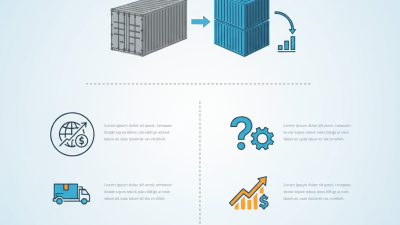
Compare tare mass, usable payload, and the ISO gross mass limit before selecting a foldable container.
The calculations use the widely applied 30,480 kg maximum gross mass for a standard 20-foot ISO container.
Payload is calculated as gross mass minus tare mass. A lighter container provides more cargo capacity, but the
certified rating plate, structural condition, and transport regulations must always be verified before loading.
Assess Folding Performance: Confirm the Supplier’s Stated 4:1 Stack Ratio
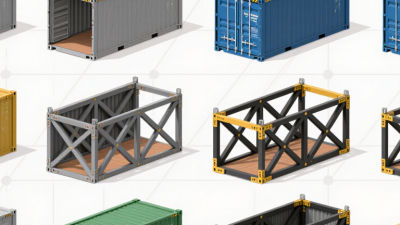
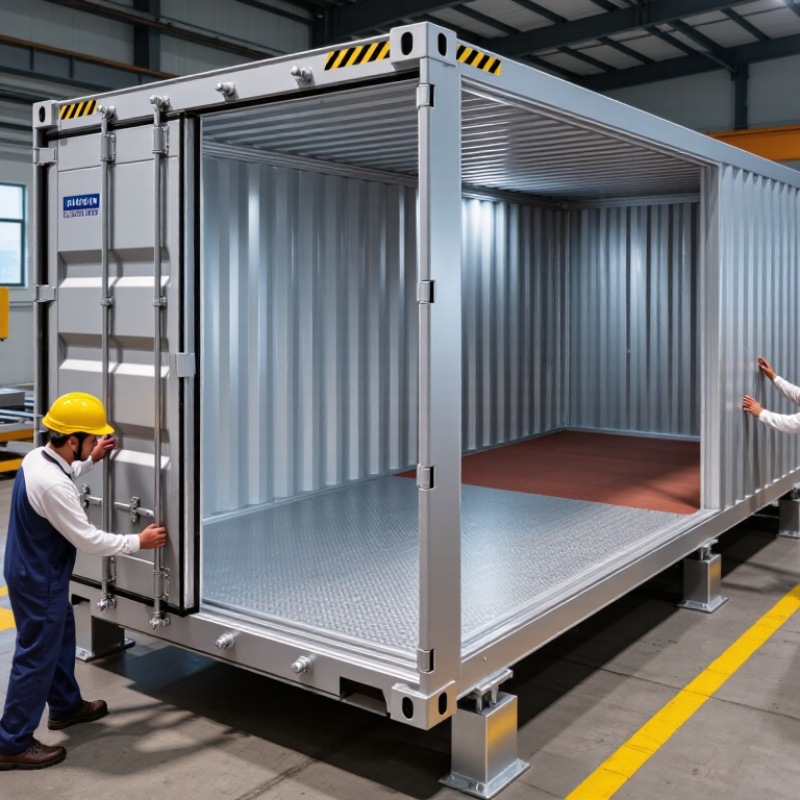
When choosing a foldable shipping container from China, treat a stated 4:1 stack ratio as an engineering claim, not a sales phrase. Confirm what the ratio means in writing. It may indicate that four folded units occupy approximately the height of one assembled unit. However, some suppliers measure only the frame, excluding doors, corner fittings, or protective parts. That difference can affect warehouse planning.
Ask for folded and assembled dimensions, detailed drawings, and a loading diagram. Then inspect the locking pins, hinges, corner posts, and roof edges. These parts must align without forced movement. A practical trial should stack four empty containers on a level surface. Check the total height, contact points, and visible deformation. Numbers need evidence. Do not guess.
The test should also include repeated folding and unfolding. Ten cycles may reveal loose pins, scraping metal, or hinge distortion. Ask whether the ratio remains valid after normal handling, not only after factory assembly. Review photos or videos showing a complete stack, with a measuring tape visible. If possible, request an independent inspection before shipment. I have found that a neat first stack can hide poor alignment underneath. The supplier should explain the maximum safe load for folded units and separate it from the load rating of assembled containers. A 4:1 ratio improves storage efficiency, but it does not automatically prove durability, safety, or long-term reliability.
Audit China Suppliers: Inspect Welding, Coatings, QC Records, and Incoterms
A foldable shipping container should be audited as a welded structure, not just a low-cost product. Ask the Chinese supplier for welder qualifications, welding procedures, and inspection records. Check corner castings, hinge joints, locking bars, and frame intersections. Look for undercutting, uneven beads, visible pores, and fresh paint hiding repairs. A sample unit can look excellent while production quality varies. That risk deserves attention.
Coatings need equal scrutiny.
Request the coating system, surface-preparation method, dry-film thickness readings, and repair procedure. Inspect inside corners and the underside of the floor frame, where moisture often remains. An independent inspector can use a calibrated thickness gauge and record location-based readings. Photos alone are weak evidence. The 2023 Logistics Performance Index assessed 139 economies and highlighted infrastructure, customs, and shipment reliability as key logistics factors. Poor packaging or delayed documentation can erase a cheap purchase advantage.
QC records should include material certificates, dimensional checks, load-test results, weld inspections, and final release signatures. Confirm that records match the actual serial number. Keep this simple. Then review Incoterms 2020 carefully. Under FOB, the buyer typically controls the main ocean freight, while under DAP, the seller carries more transport responsibility before destination delivery. UNCTAD’s Review of Maritime Transport reports that over 80% of global merchandise trade by volume moves by sea. Small misunderstandings can therefore become expensive. I would also verify who handles export clearance, insurance, unloading, and destination charges. Even experienced buyers miss one line. That is the part worth questioning.